Best V8 Engine Model Kits You Can Buy (2026 Guide)

A V8 engine model can mean very different things. Some are full-metal mechanical kits designed to reveal how pistons, connecting rods, crankshafts and timing systems work. Others are genuine miniature internal-combustion engines capable of running on gasoline or nitro fuel.
That difference matters. The best model for someone who wants a detailed five-hour assembly project is not necessarily the best choice for an enthusiast who wants to start, tune and maintain a real miniature V8.
For this updated 2026 guide, we compare four distinct V8 models from TOYAN, TECHING and ENJOMOR, ranging from a 500+ piece mechanical build to a 78cc gasoline V8.
If you want to see all currently available models in one place, browse our complete V8 Engine Model Kits collection.
Shop V8 Engine Model KitsBest V8 Engine Models at a Glance
The biggest distinction is not price or part count—it is how the completed engine operates. The TECHING V8 is an electrically driven mechanical model, while the TOYAN and ENJOMOR models below are real miniature combustion engines.
| Model | Engine Type | Power / Fuel | Key Feature | Best For |
|---|---|---|---|---|
| TOYAN FS-V800WGPC | 28cc OHV V8 | Gasoline | Real 4-stroke combustion | Miniature engine enthusiasts |
| TECHING 1:3 V8 | Mechanical V8 model | Electric motor | 500+ piece metal assembly | DIY builders & STEM learning |
| ENJOMOR GS-V8 | 78cc DOHC V8 | 95# gasoline | Large-displacement real engine | Advanced collectors |
| TOYAN FS-V800 | 28cc 4-stroke V8 | 20–25% nitro fuel | Up to 12,500 RPM | Nitro engine hobbyists |
1. TOYAN FS-V800WGPC 28cc OHV Gasoline V8
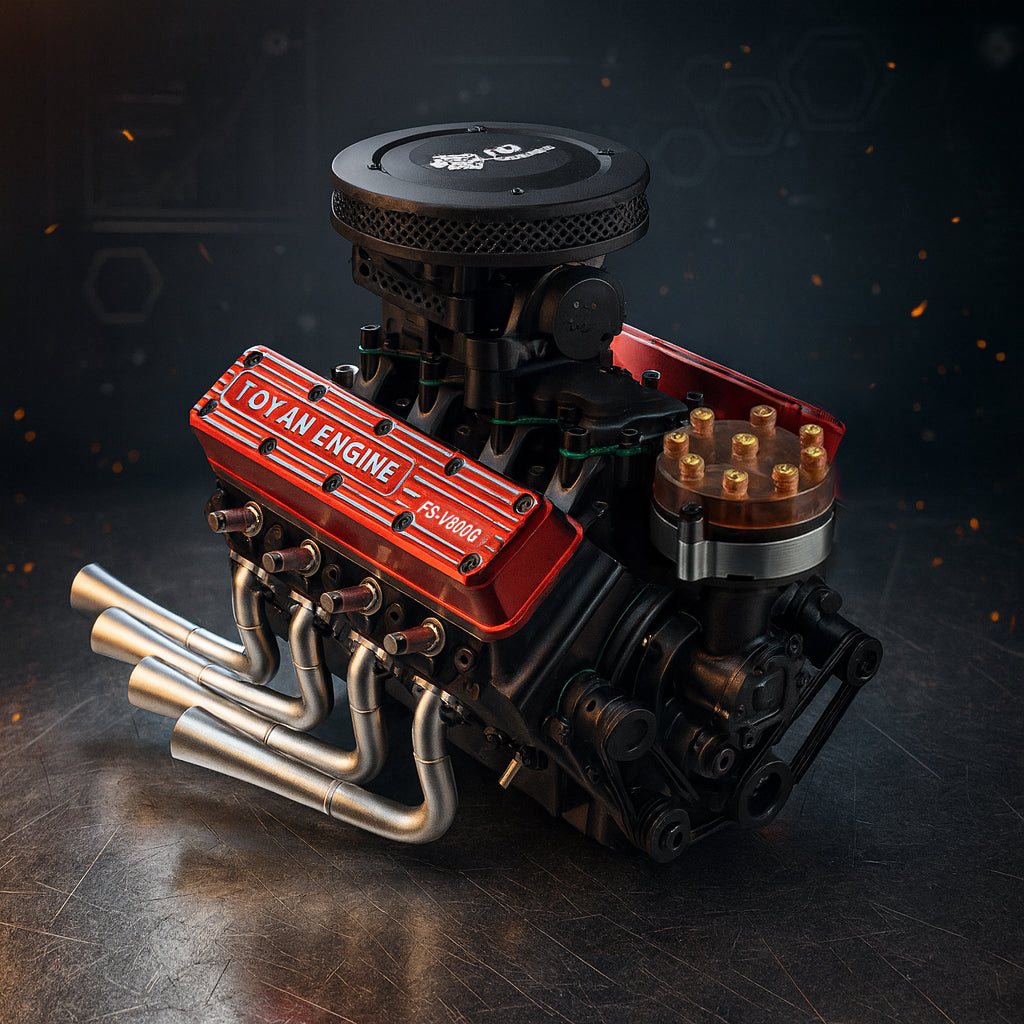
The TOYAN FS-V800WGPC is one of the most approachable options in this guide for enthusiasts who specifically want a real working mini V8 engine rather than a motor-driven demonstration model.
It uses a 28cc, 90-degree V8 layout with an OHV valvetrain and true four-stroke gasoline combustion. That gives the owner a very different experience from a conventional assembly kit: the engine needs real fuel preparation, starting procedures, lubrication, tuning and maintenance.
The main appeal is authenticity. You are not simply watching an electric motor move eight pistons. You are operating a compact internal-combustion V8 with real ignition, exhaust sound, throttle response and multi-cylinder behavior.
- Displacement: 28cc
- Configuration: 90° V8
- Cycle: Four-stroke
- Valvetrain: OHV
- Fuel: Gasoline, prepared according to the engine manual
- Operation: Real internal combustion
Best for: Automotive enthusiasts, miniature-engine collectors, RC builders and hobbyists who want to learn real engine operation instead of only assembling a mechanical display.
2. TECHING 1:3 Full-Metal V8 Engine Model Kit
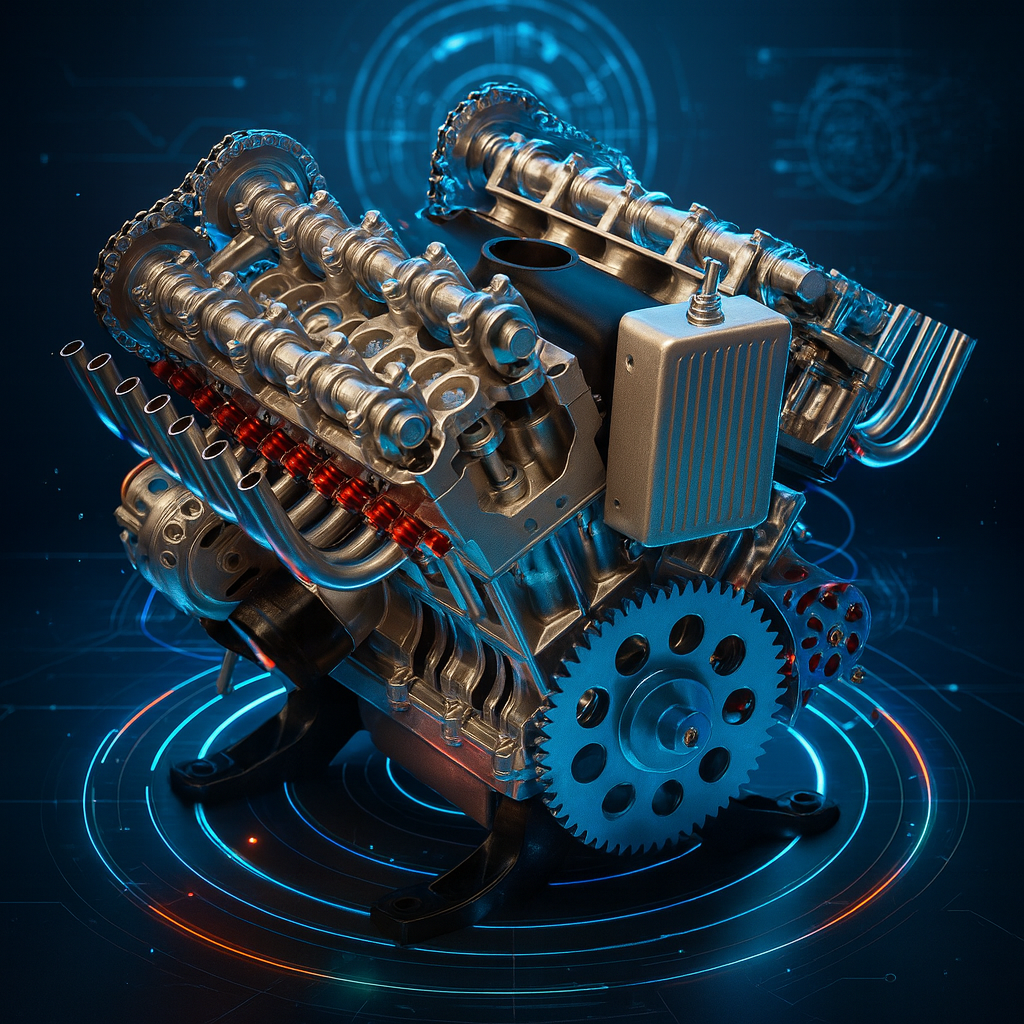
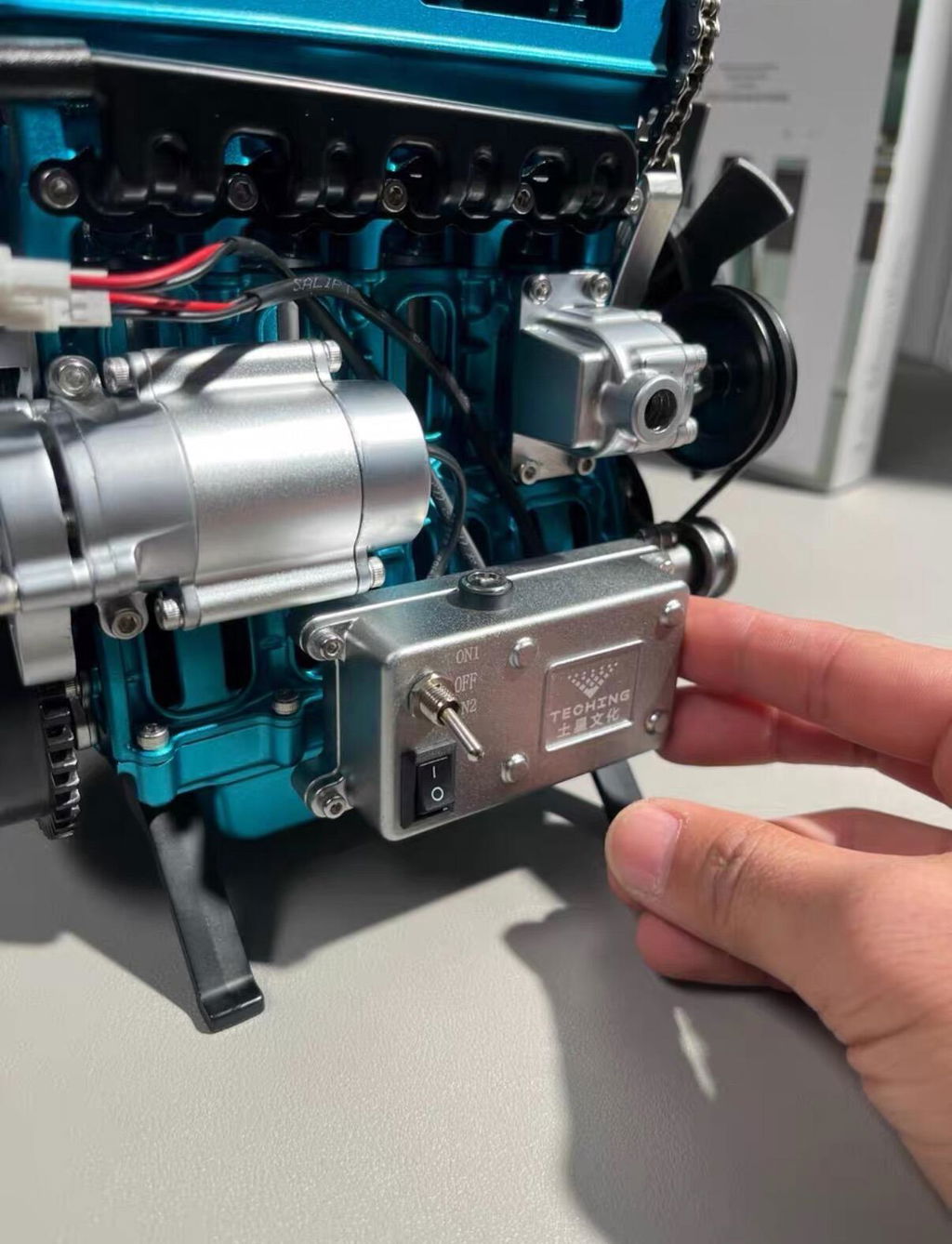
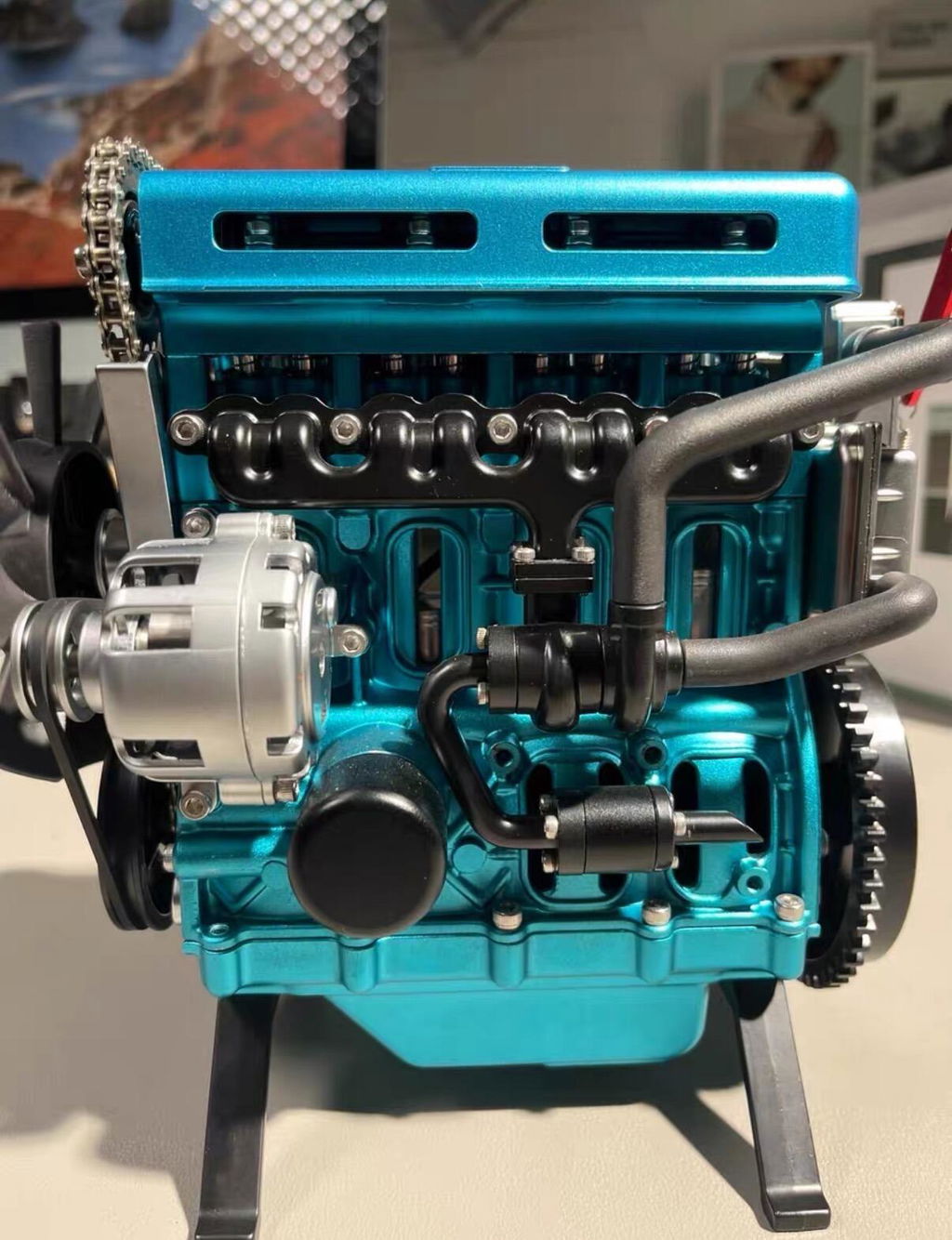
The TECHING 1:3 Full-Metal V8 is the most assembly-focused model in this comparison. It contains more than 500 precision metal components and is designed around the experience of building a V8-style mechanism piece by piece.
After assembly, an electric motor drives the mechanical system so you can observe the coordinated movement of the pistons, connecting rods, crankshaft and timing components. It is important to understand that this is not a fuel-powered engine. Its purpose is mechanical demonstration, education and display.
That distinction actually makes the TECHING V8 a better choice for many builders. You get the visual and mechanical complexity of a V8 without needing to manage gasoline, nitro fuel, ignition or combustion-engine maintenance.
- Scale: 1:3
- Parts: 500+ precision metal components
- Construction: Aluminum alloy and stainless steel
- Operation: Electric motor-driven mechanical motion
- Approx. assembly time: About 5 hours
- Difficulty: Intermediate
- Product size: 172 × 198 × 180 mm
Best for: DIY builders, car enthusiasts, STEM learners, educators and collectors who value the assembly process and want visible engine mechanics without real combustion.
3. ENJOMOR GS-V8 78cc DOHC Gasoline Engine

The ENJOMOR GS-V8 78cc changes the scale of this comparison completely. With 78cc of displacement, a DOHC valvetrain and genuine gasoline combustion, it is substantially more serious than a conventional desktop engine model.
The GS-V8 uses a V-shaped eight-cylinder configuration with four-stroke operation, water cooling, CDI ignition, an independent oil-pump lubrication system and electric starting. The visible timing system and larger physical size also give it much stronger mechanical presence.
Performance specifications further separate it from display-oriented models. The engine is rated for up to 9,000 RPM and a maximum power figure of 3.8 kW. At approximately 4.5 kg for the engine itself, this is a collector-grade miniature powerplant rather than a lightweight demonstration piece.
- Model: ENJOMOR GS-V8
- Displacement: 78cc
- Configuration: V-shaped 8-cylinder
- Cycle: Four-stroke
- Valvetrain: DOHC
- Maximum speed: 9,000 RPM
- Maximum power: 3.8 kW
- Fuel: 95# gasoline
- Cooling: Water-cooled
- Lubrication: Independent oil-pump system
- Ignition: CDI ignition with distributor
- Starting: Electric start
- Product size: 13.6 × 17.9 × 13.8 cm
- Weight: Approx. 4.5 kg
Best for: Experienced internal-combustion hobbyists, serious V8 collectors, mechanical engineering enthusiasts and advanced custom projects where a larger real-running engine is the goal.
4. TOYAN FS-V800 28cc Nitro V8 Engine

The TOYAN FS-V800 Nitro V8 is the choice for enthusiasts who specifically prefer the feel and tuning experience of nitro-powered model engines.
It is a genuine 28cc four-stroke V8 built around a 90-degree configuration. Unlike the TECHING mechanical model, the FS-V800 uses real combustion and requires 20–25% nitro fuel. It also incorporates water cooling, splash lubrication and electric starting.
Its operating range extends from approximately 1,800 to 12,500 RPM, with a rated output of 4.35 PS at 11,200 RPM. That higher-RPM character gives this model a distinctly different personality from a gasoline-powered miniature V8.
- Model: TOYAN FS-V800
- Scale: 1:10
- Displacement: 28cc (3.5cc × 8)
- Configuration: 90° V8
- Cycle: Four-stroke
- Operating speed: 1,800–12,500 RPM
- Power: 4.35 PS @ 11,200 RPM
- Fuel: 20–25% nitro fuel
- Cooling: Water cooling
- Lubrication: Splash lubrication
- Starting: Electric starter motor
- Starting battery: 7.4V lithium battery required
- Product size: 12.34 × 3.2 × 12.73 cm
- Product weight: Approx. 2,050 g
Best for: Experienced RC-engine hobbyists and miniature-engine enthusiasts who already understand fuel preparation, starting procedures and engine tuning and specifically want a nitro V8.
Why Are V8 Engine Models So Popular?
A V8 is mechanically interesting because eight cylinders must work together through a shared crankshaft and carefully coordinated valve and ignition timing. That gives a detailed V8 model far more visual and mechanical complexity than many single-cylinder or twin-cylinder engine projects.
Mechanical V8 Model vs Real Working Mini V8 Engine
Mechanical V8 Engine Models
A mechanical model such as the TECHING V8 reproduces engine structure and movement without burning fuel. The electric motor drives the completed mechanism so the owner can study piston motion, crankshaft rotation and timing relationships repeatedly and safely indoors.
This type of kit is usually the better choice when building and understanding the mechanism is more important than learning fuel systems and engine tuning.
Real Combustion V8 Engines
The TOYAN and ENJOMOR models in this guide are genuine miniature internal-combustion engines. They require more knowledge because combustion adds fuel delivery, ignition, lubrication, cooling, starting, break-in and maintenance to the ownership experience.
That extra involvement is exactly why serious engine hobbyists often prefer them: the experience continues long after the initial assembly or setup is complete.
Which V8 Engine Model Should You Buy?
It offers the strongest assembly-focused experience, 500+ metal parts and visible motor-driven mechanics without fuel or ignition.
The 28cc FS-V800WGPC gives you genuine four-stroke gasoline combustion in a relatively compact enthusiast platform.
Its 20–25% nitro fuel requirement and 12,500 RPM ceiling make it especially appealing to experienced RC and model-engine users.
The 78cc displacement, DOHC architecture, independent lubrication and larger physical scale make the GS-V8 the most substantial combustion engine in this comparison.
Are V8 Engine Kits Suitable for Beginners?
Not all V8 models have the same difficulty. The TECHING V8 is rated as an intermediate mechanical build and takes approximately five hours to assemble according to its current product specifications. It does not require fuel or combustion-engine tuning.
Real gasoline and nitro engines are more demanding. The mechanical assembly is only part of the learning process; users must also understand the correct fuel, lubrication, cooling, starting and operating procedures.
If this is your first engine project, you may want to compare less demanding options in our Build Your Own Engine Kits collection before moving directly to an advanced combustion V8.
Gasoline V8 vs Nitro V8: What's the Difference?
Both are real combustion engines, but they provide different operating experiences. Gasoline engines such as the TOYAN FS-V800WGPC and ENJOMOR GS-V8 use gasoline-based fuel systems, while the TOYAN FS-V800 is designed specifically for 20–25% nitro fuel.
Nitro engines are particularly familiar to experienced RC hobbyists and tend to emphasize high-RPM operation and frequent tuning. Gasoline engines can offer a different torque, sound and operating character and may appeal more strongly to enthusiasts seeking a miniature version of a conventional automotive-style engine experience.
Neither should be selected purely because one fuel type sounds more exciting. Choose based on your existing experience, access to the correct fuel, the manufacturer's operating instructions and your willingness to maintain the engine properly.
Who Should Buy a V8 Engine Model?
- Automotive enthusiasts who want to explore V8 architecture on a smaller scale.
- DIY builders looking for a challenging metal engineering project.
- Model-engine hobbyists interested in real fuel, ignition and tuning.
- Engineers and STEM learners studying multi-cylinder mechanical systems.
- Collectors looking for a visually impressive mechanical centerpiece.
- RC builders considering advanced custom vehicle, boat or experimental applications.
Gasoline and nitro engines require correct fuel, lubrication, cooling, starting equipment and safe operating procedures. Always follow the manual supplied for the exact engine, keep rotating and hot components clear, and operate combustion engines in an appropriate, well-ventilated environment.
V8 Engine Model FAQ
Do V8 engine models actually work?
Yes, but “working” can mean two different things. Mechanical models such as the TECHING V8 use an electric motor to reproduce realistic internal movement. TOYAN and ENJOMOR V8 engines use genuine fuel combustion and operate as miniature internal-combustion engines.
What is the best V8 engine model kit?
It depends on your goal. The TECHING 1:3 V8 is a strong choice for hands-on assembly and mechanical learning. The TOYAN gasoline and nitro V8 engines are suited to users who want real combustion, while the ENJOMOR GS-V8 is the most substantial option in this comparison for advanced collectors.
Which V8 model is best for building?
The TECHING 1:3 Full-Metal V8 is the most build-focused model in this guide. It includes more than 500 precision components and is designed around step-by-step mechanical assembly.
Which V8 engine is the most powerful in this comparison?
The ENJOMOR GS-V8 has the largest displacement at 78cc and is currently specified with a maximum power figure of 3.8 kW. It is substantially larger than the two 28cc TOYAN engines.
What fuel does the TOYAN FS-V800 Nitro V8 use?
The current specification lists 20–25% nitro fuel. Always follow the latest product manual and operating guidance for fuel selection and preparation.
What fuel does the ENJOMOR GS-V8 use?
The current GS-V8 specification lists 95# gasoline together with a separate engine lubrication system. Always follow the supplied manual for the exact fuel and oil requirements before operation.
How long does the TECHING V8 take to build?
Its current product specification lists an approximate assembly time of five hours. Actual completion time depends on builder experience, pace and how carefully each stage is completed.
Are V8 engine kits suitable for beginners?
Mechanical V8 kits are generally easier to approach because they do not require fuel, ignition or engine tuning. Real gasoline and nitro V8 engines have a steeper learning curve and are better suited to experienced hobbyists or beginners who are prepared to study the operating procedures carefully.
Are V8 engine models good gifts?
Yes, especially for automotive enthusiasts, engineers, mechanics and collectors. For gifts, match the model to the recipient's experience: a mechanical V8 is easier to own, while a real combustion engine requires more technical knowledge and maintenance.
Can miniature V8 engines be used for RC projects?
Some real combustion V8 engines can be adapted for advanced RC or custom mechanical projects, but installation can require custom mounts, drivetrain components, cooling systems and other engineering work. Always check the specific engine requirements before planning an RC installation.
Final Verdict: Which V8 Should You Choose?
For the most satisfying pure assembly experience, choose the TECHING 1:3 V8. For a compact real gasoline-powered miniature V8, the TOYAN FS-V800WGPC is the more natural choice.
If you already have experience with nitro-powered engines, the TOYAN FS-V800 Nitro offers genuine four-stroke V8 operation with a high-RPM character. For experienced enthusiasts looking for a larger flagship powerplant, the ENJOMOR GS-V8 78cc is in a different class in terms of displacement, architecture and mechanical presence.
Compare all four models in our complete ENGINEKITOR V8 Engine Model Kits collection.
Explore All V8 Engine Models


Leave a comment