How to Start a Mini Gasoline Engine: F2 First-Start & Tuning Guide

A miniature gasoline engine may fit on a workbench, but starting one successfully still depends on many of the same fundamental conditions found in a full-size internal-combustion engine: fuel, air, compression, spark and correct timing.
If just one of those conditions is missing—or happens at the wrong moment—the engine may crank without firing, produce occasional pops, start for only a second, or refuse to run consistently.
That is why the first start is one of the most important and rewarding parts of building a real working miniature engine.

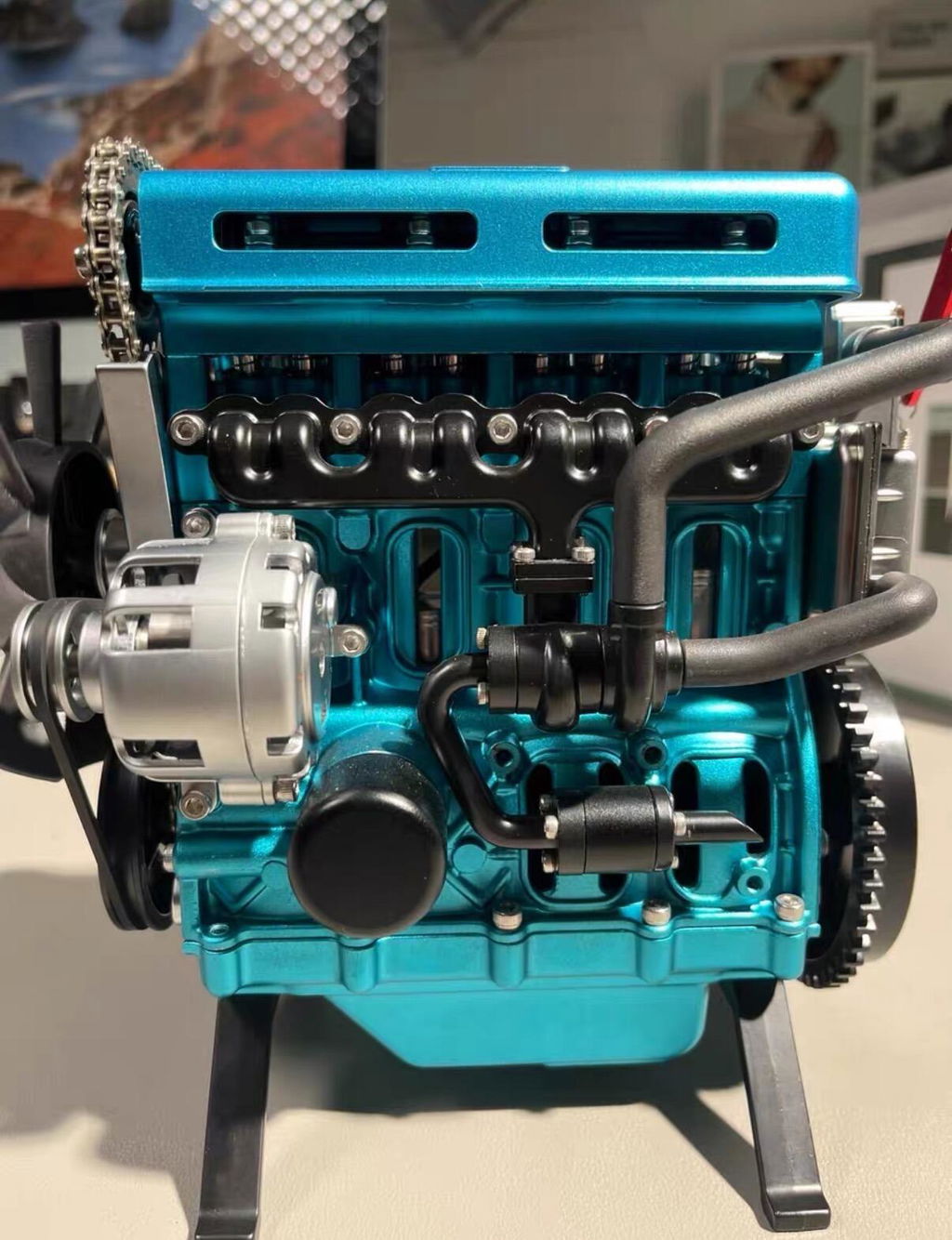
ENGINEKITOR F2 — a real 7.5cc twin-cylinder four-stroke gasoline engine designed for hands-on assembly, starting and operation.
This guide uses the ENGINEKITOR F2 7.5cc Twin-Cylinder Engine as a practical example.
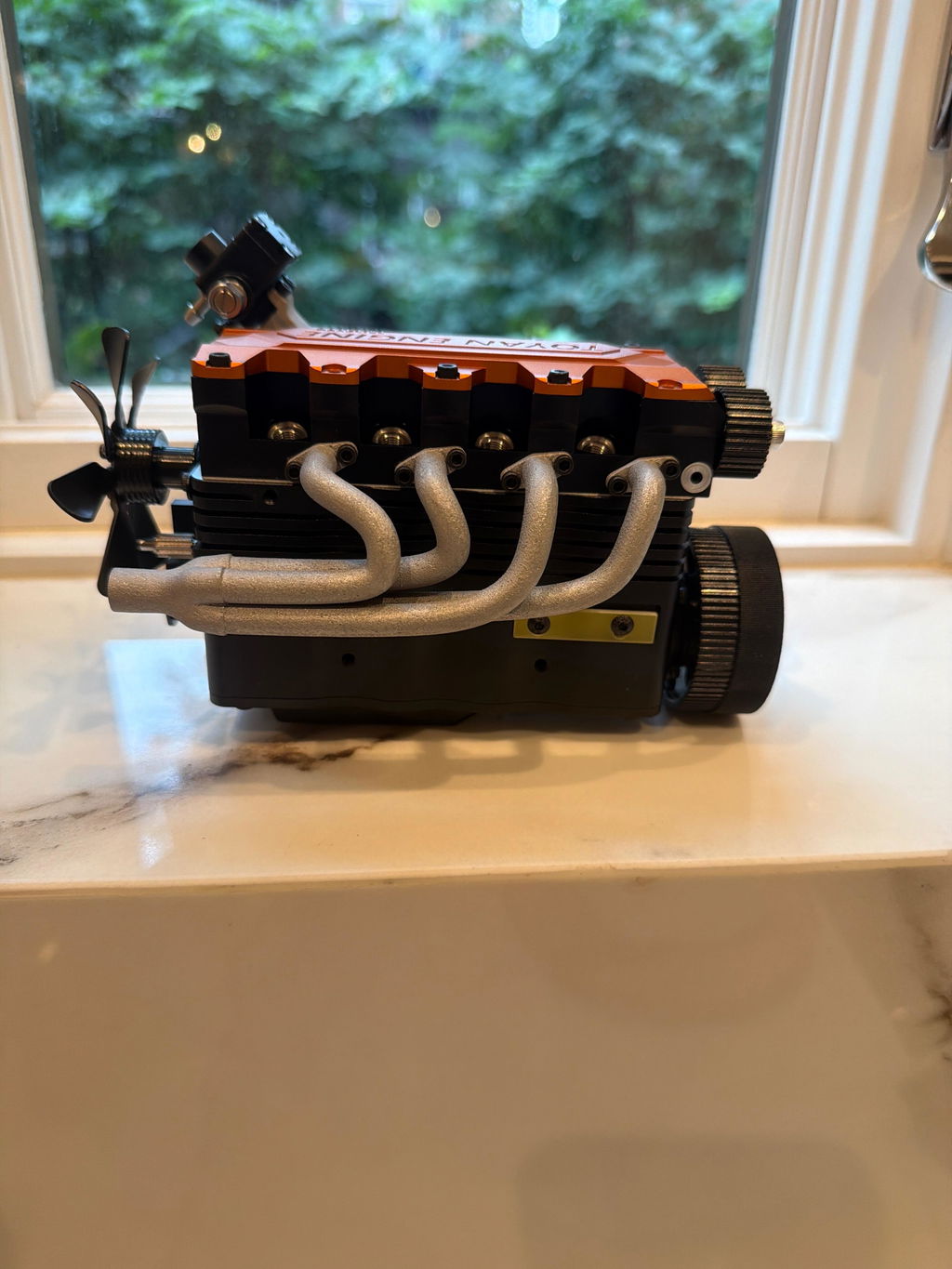
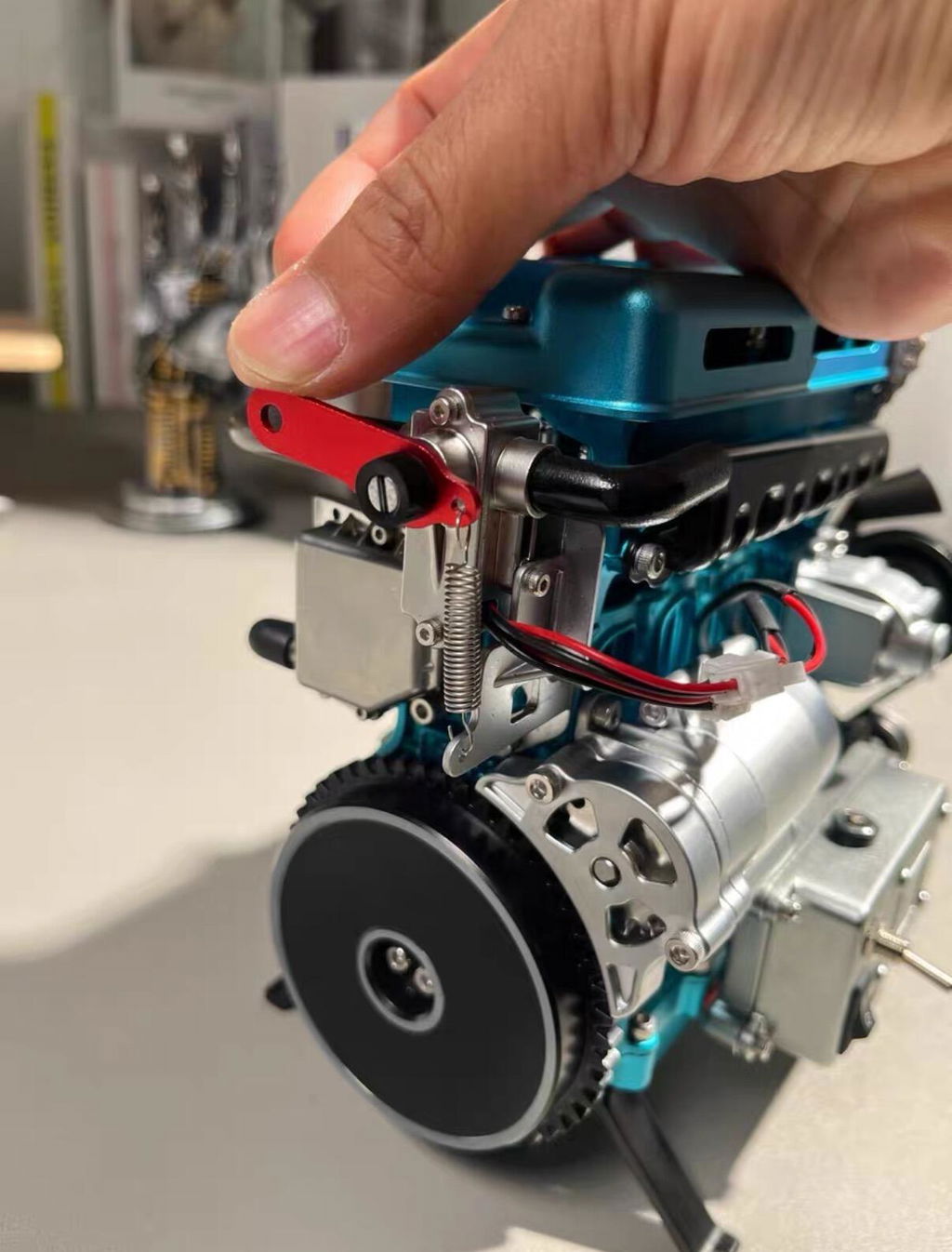
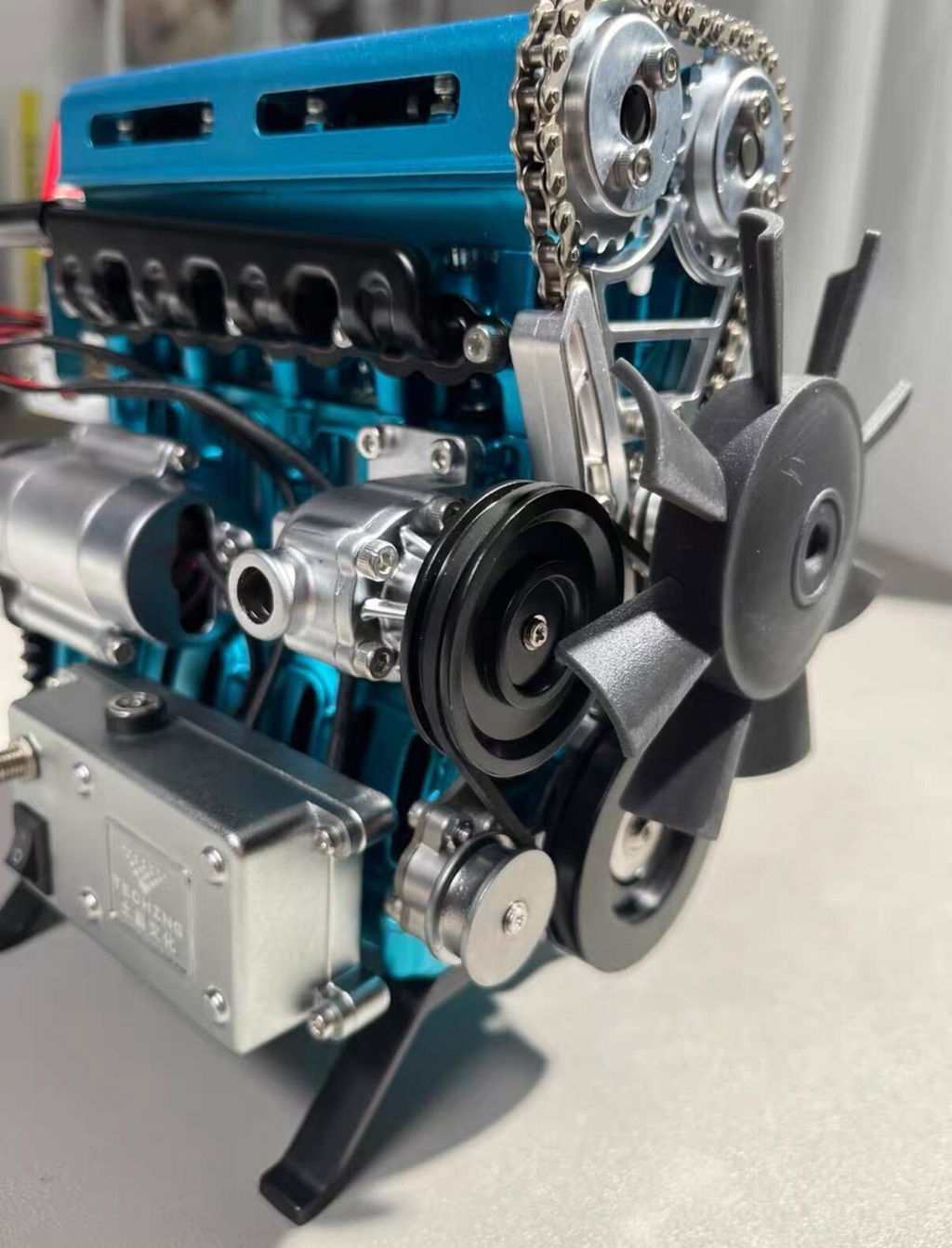
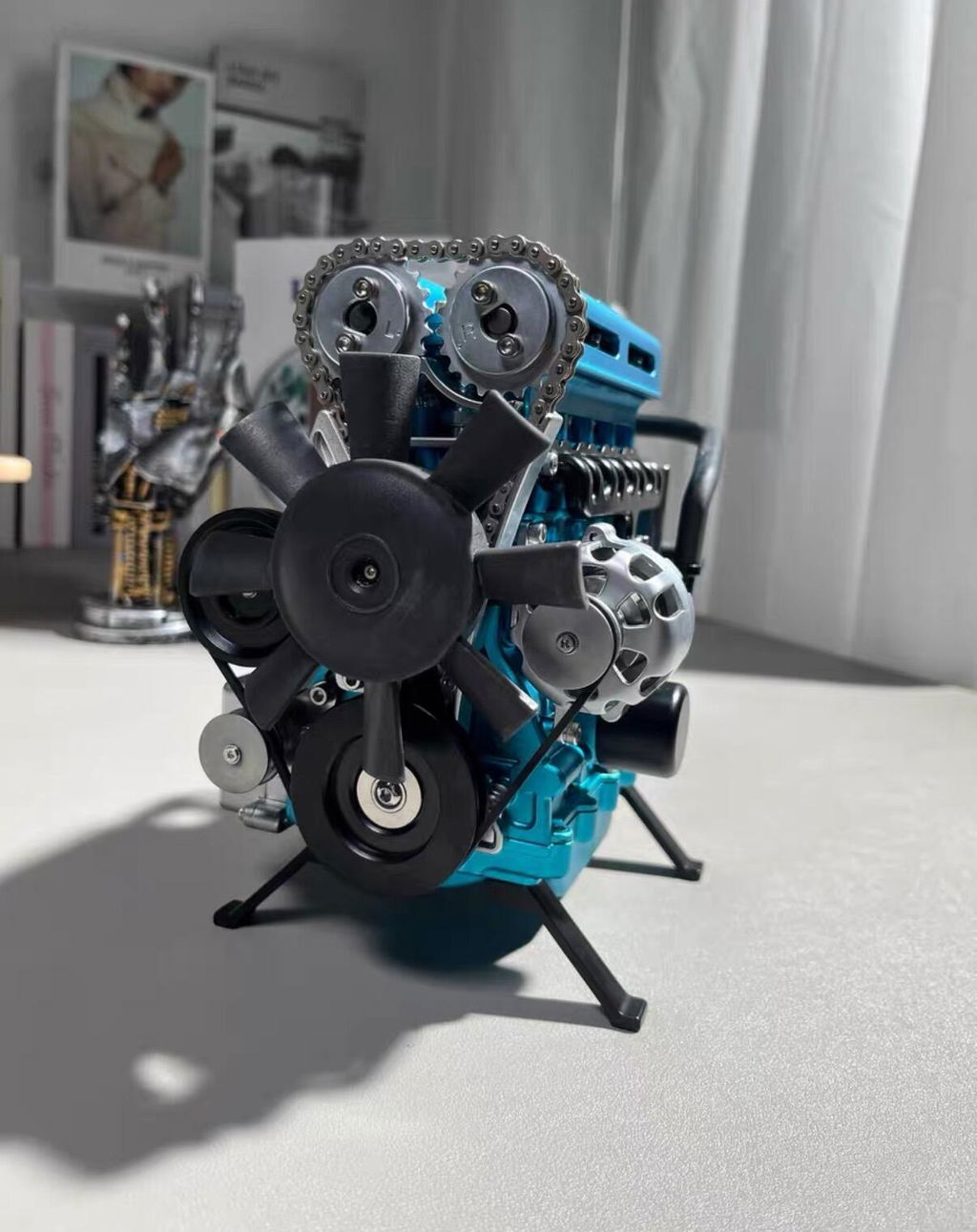
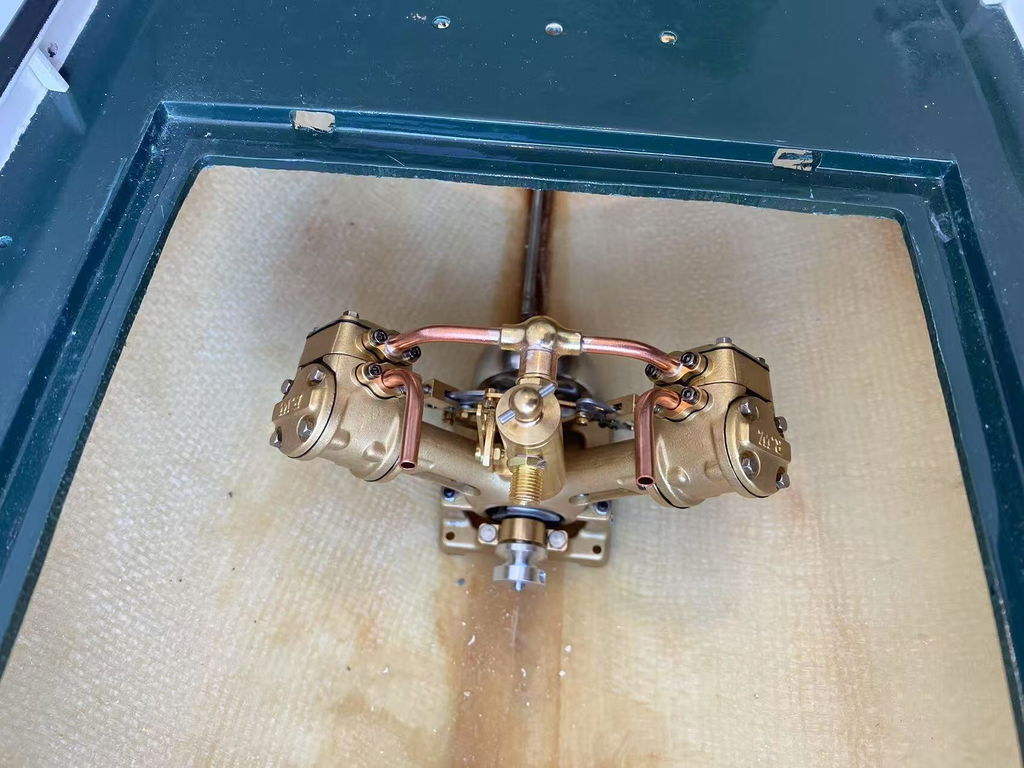
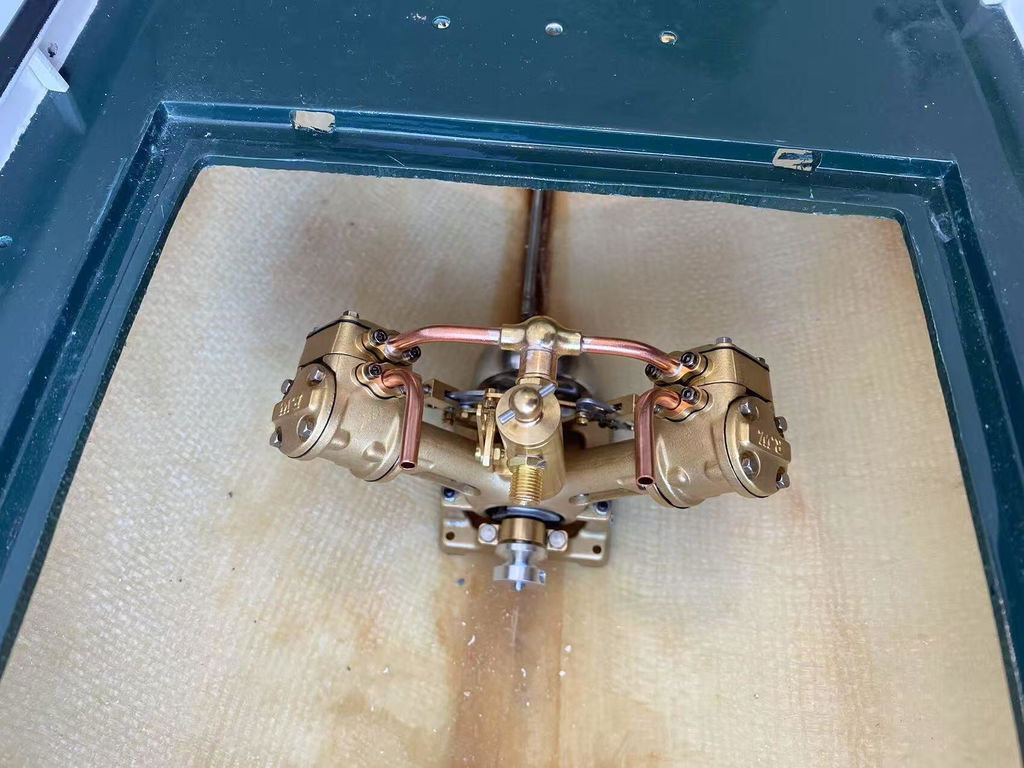
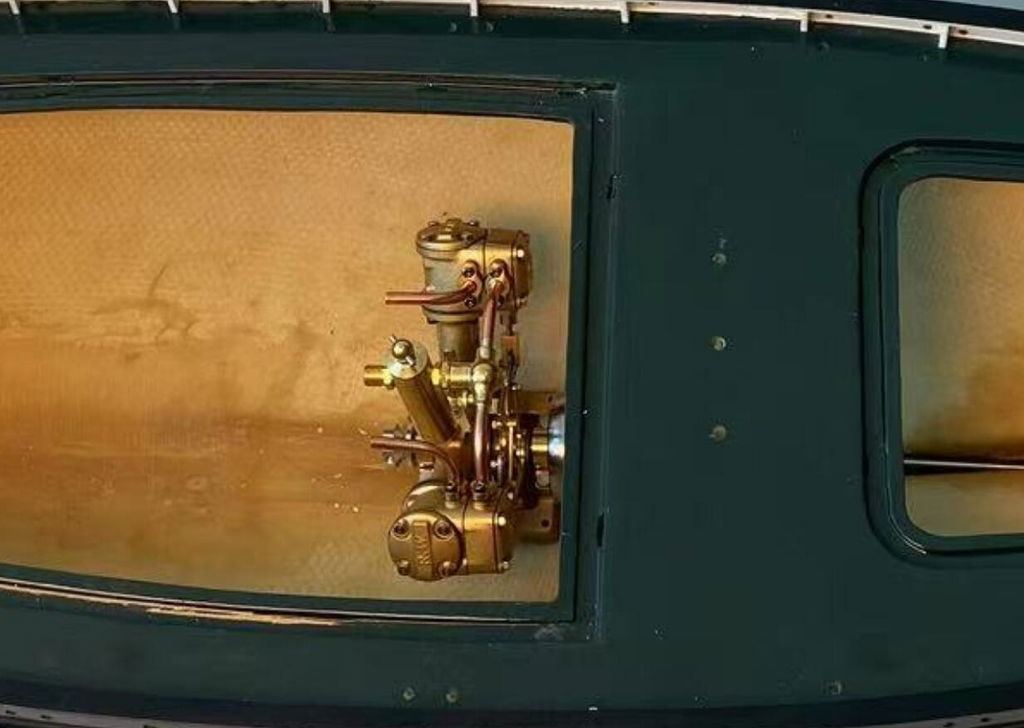
The F2 combines a twin-cylinder four-stroke layout, SOHC valve train, CDI electronic ignition, electric starting and circulating water cooling in a compact working engine platform.
How Do You Start a Mini Gasoline Engine?
The short answer is that the engine must successfully complete a chain of mechanical and combustion events.
The starter rotates the crankshaft and begins moving the pistons and valve train. Fuel and air enter the cylinder, the piston compresses the mixture, and the ignition system produces a spark at the appropriate point in the cycle.
Once combustion begins producing enough repeating power strokes, the engine becomes self-sustaining and no longer relies on the starter to keep the crankshaft rotating.
If you want to understand this process in greater mechanical detail, read our complete explanation of how a miniature gasoline engine works .
Before the First Start: Check These Four Systems
One of the biggest mistakes new builders make is immediately changing carburetor settings when the engine does not start.
The carburetor is only one part of the system. Before tuning anything, divide the engine into four major areas.

The F2 experience begins with real mechanical components that are assembled into a functioning miniature combustion engine.
Mini Gasoline Engine First-Start Checklist
Before pressing the starter, work through this checklist systematically instead of changing several adjustments at the same time.
- Confirm the engine is completely assembled. Check that no component is obviously loose, incorrectly installed or mechanically binding.
- Verify crankshaft and camshaft timing. A four-stroke engine depends on the valve train remaining synchronized with piston position.
- Check the CDI and spark plug connections. Loose ignition connections can result in inconsistent or absent ignition.
- Confirm the starting battery is adequately charged. Insufficient cranking speed can make an otherwise correctly assembled engine difficult to start.
- Use the recommended fuel. Different fuel types can require different carburetor calibration and may not behave the same way.
- Inspect the fuel tubing. Check for kinks, incorrect routing, leaks or obvious air entering the fuel path.
- Prepare the cooling system. Real gasoline combustion produces real operating heat.
- Clear the work area. Keep fingers, tools, clothing and loose wires away from rotating engine components.
Watch the ENGINEKITOR F2 Run
Before going deeper into first-start troubleshooting, watch the ENGINEKITOR F2 twin-cylinder gasoline engine operating in a real setup. This is genuine internal combustion — not an electric motor continuously driving the crankshaft.
Turn up the sound. Watch the miniature twin-cylinder engine come to life through real combustion, CDI ignition and a circulating water-cooling system.
Explore the ENGINEKITOR F2 →
Step 1: Check the Mechanical Assembly Before Tuning
Before trying to solve a starting problem with more fuel or a different carburetor adjustment, confirm that the engine can rotate normally.
As the starter turns the F2, the crankshaft, pistons, camshaft and valves must move through their cycle without abnormal locking, scraping or excessive resistance.
Some resistance from compression is normal. Mechanical binding is not.
If the engine suddenly becomes unusually tight, stop and inspect the assembly rather than forcing the starter to overcome the resistance.
Step 2: Confirm Fuel Is Actually Reaching the Carburetor
An engine can crank perfectly while receiving no usable fuel mixture at all.
Follow the fuel path:
Check whether fuel is reaching the carburetor, whether the fuel line contains obvious air gaps, and whether the tubing is correctly connected.
No Firing at All vs. Occasional Popping
These two symptoms should not be diagnosed in exactly the same way.
If the starter turns but the engine shows absolutely no combustion reaction, one of the fundamentals—fuel, ignition, compression or timing—may be missing.
If the engine produces occasional pops or brief firing sounds, combustion is already occurring intermittently.
That usually means the engine is much closer to running, and the troubleshooting process should become more controlled, not more aggressive.
Step 3: Verify Spark and Ignition Timing
A gasoline engine requires more than fuel and compression. The compressed mixture must ignite at the correct point in the cycle.
Check the CDI connections, spark plug leads and electrical power supply.
Having a spark is not exactly the same as having a spark at the correct time.
In a four-stroke engine, piston position, valve position and ignition timing must remain synchronized.
If you want to understand the relationship between the crankshaft, camshaft and ignition system in greater detail, see our ENGINEKITOR F2 Full Guide, Specs & How It Works .

A complete running setup brings the engine, ignition, starting, fuel-delivery and cooling systems together.
Step 4: Start From the Carburetor Baseline
Random carburetor tuning can turn one starting problem into several.
If the engine has a recommended manufacturer baseline, begin from that known setting.
Then use a controlled process:
Do not change several carburetor settings at once. If the engine's behavior improves or becomes worse, you need to know which adjustment caused the change.
How Can You Tell if a Mini Engine Is Running Rich or Lean?
The carburetor controls the relationship between fuel and air entering the engine.
Too much fuel relative to air produces a rich mixture. Too little fuel relative to air produces a lean mixture.
Possible Signs of a Rich Mixture
- The engine repeatedly fires but struggles to clear itself.
- The spark plug becomes noticeably wet with fuel.
- Throttle response feels heavy or sluggish.
- The engine briefly starts but becomes increasingly unstable.
Possible Signs of a Lean Mixture
- The engine fires intermittently but struggles to continue running.
- Throttle response may be sharp but inconsistent.
- RPM may rise or behave unpredictably.
- Operating temperature may rise faster than expected.
During the first running sessions, the goal should not be maximum RPM.
The goal is:
Reliable starting → Stable running → Predictable throttle response.
Why Small Carburetor Adjustments Matter
Miniature engines use extremely small fuel and airflow passages. That means an adjustment that appears minor at the needle can produce a noticeable change in mixture.
Instead of making large turns, make a small change and observe:
- Does the engine fire more frequently?
- Does it become easier to start?
- Does it continue running for longer?
- Does throttle response improve?
- Does the spark plug become wetter or drier?
Each attempt should give you information. Engine tuning works best as diagnosis rather than guessing.
What Does It Mean When the Engine Pops but Won't Start?
Popping is one of the most useful first-start symptoms.
An occasional combustion sound usually indicates that at least some fuel, compression and ignition are present.
Possible causes of repeated popping without sustained running include:
- Fuel mixture that is too rich or too lean
- Incorrect ignition timing
- Incorrect mechanical timing
- Inconsistent fuel delivery
- Insufficient cranking speed
- Unequal contribution between cylinders
A pop is progress. If combustion is already occurring, avoid resetting every system at once. Change one variable, test again and observe the result.
What If the Engine Starts and Immediately Stops?
An engine that runs for one or two seconds and stops should be diagnosed differently from an engine that never fires.
The initial combustion already proves that the engine can ignite the mixture.
The next question becomes:
Why can't the engine sustain combustion after the initial firing?
Areas to inspect include:
- Continuous fuel delivery
- Idle and throttle position
- Carburetor mixture
- Cranking and transition speed
- Mechanical friction in a freshly assembled engine
Mini Gasoline Engine Troubleshooting Table
Use engine behavior as diagnostic information instead of immediately changing every adjustment.
| Symptom | What It May Suggest | What to Check First |
|---|---|---|
| Starter turns but there is no firing | Fuel, spark, compression or timing may be missing | Fuel delivery, CDI, spark plugs and timing |
| Occasional pops but no sustained start | Mixture or timing may be close but not correct | Carburetor baseline, fuel delivery and ignition timing |
| Starts and immediately stops | Combustion cannot sustain itself | Fuel flow, idle position and mixture |
| Spark plug repeatedly becomes wet | Possible excessive fuel | Rich mixture or flooding |
| Engine becomes unusually hot quickly | Cooling or mixture issue | Cooling circulation and fuel mixture |
| RPM rises excessively after starting | Throttle position or possible lean condition | Throttle position and carburetor mixture |
| Twin-cylinder engine sounds uneven | Cylinders may not be contributing equally | Ignition, spark plugs, mixture and timing |
| Engine suddenly becomes mechanically tight | Possible mechanical problem | Stop operation and inspect the assembly |
Why Twin-Cylinder Engines Add Another Layer to Troubleshooting
The ENGINEKITOR F2 uses a twin-cylinder configuration with a combined displacement of 7.5cc.
Both cylinders interact through the same crankshaft system, while valve and ignition events must remain synchronized with each cylinder's mechanical position.
If one cylinder contributes differently from the other, the engine may still show signs of life but sound uneven, respond poorly to throttle or run less consistently.
This is why a twin-cylinder engine communicates through more than simply "running" or "not running."
Pay attention to:
- Engine sound
- RPM stability
- Throttle response
- Operating temperature
- Vibration
- Combustion consistency

The complete F2 running setup combines fuel delivery, CDI ignition, electric starting and circulating water cooling.
Do Not Make the First Start a Maximum-RPM Test
Once a freshly assembled miniature engine finally starts, it can be tempting to immediately open the throttle.
Maximum RPM should not be the objective of the first running session.
Instead, verify:
- The engine can maintain a stable running condition.
- The cooling circuit is functioning correctly.
- Fuel tubing and electrical connections remain secure.
- No abnormal mechanical noise is present.
- Throttle response is predictable.
- No fastener has loosened during initial operation.
Allow the engine to cool and inspect the system again before progressing to longer running sessions.
Why Starting a Real Mini Engine Is Different From a Motorized Model
In a motorized display engine, an electric motor continuously rotates the crankshaft. The pistons and valves move because the electric motor is providing the power.
A real gasoline engine works differently.
The electric starter only rotates the engine during startup. After ignition, combustion inside the cylinders has to produce enough energy to keep the crankshaft rotating.
That makes the starting process itself an important engineering lesson:
For a deeper explanation of these systems, read How Does a Miniature Gasoline Engine Work?
What Can You Learn From Starting the ENGINEKITOR F2?
The F2 turns several abstract engine concepts into systems that can actually be assembled, observed and operated.
Fuel & Air
You can see why fuel delivery and mixture quality directly affect starting behavior and throttle response.
Mechanical Timing
The SOHC valve train demonstrates why camshaft movement must remain synchronized with piston and crankshaft position.
Ignition
CDI ignition demonstrates the relationship between compression, spark timing and successful combustion.
Cooling
Circulating water cooling demonstrates why heat generated through real combustion must be managed during operation.
Engine-System Thinking
Most importantly, the F2 shows that an internal-combustion engine is not one isolated mechanism.
Fuel delivery, valve timing, compression, ignition, rotating components and cooling all have to cooperate.
Mini Gasoline Engine First-Start FAQ
Why does my mini gasoline engine crank but not start?
Start with the fundamentals. Confirm fuel delivery, spark, compression and correct timing before making significant carburetor changes.
Why does my miniature engine pop but not continue running?
Popping normally indicates that intermittent combustion is occurring. Check mixture, fuel delivery, ignition timing and mechanical timing rather than resetting every adjustment at once.
Should I adjust the carburetor before the first start?
Begin from the recommended baseline. Only make small adjustments after the other fundamental systems have been checked.
Why does my mini engine start and immediately stop?
The initial combustion proves the engine can fire, but fuel delivery, idle position, mixture or rotational speed may not yet support sustained operation.
Should I immediately run a new engine at full throttle?
No. Stable operation, cooling performance and predictable throttle response are more important during the first running sessions.
Can I run a miniature gasoline engine indoors?
A gasoline internal-combustion engine produces exhaust gases including carbon monoxide. Operate it only in an appropriate well-ventilated environment and follow the manufacturer's current safety instructions.
Build It. Start It. Learn From It.
Experience a real twin-cylinder four-stroke engine with genuine combustion, CDI ignition, electric starting and circulating water cooling.
Explore the ENGINEKITOR F2 →Build It. Start It. Understand It.
Successfully starting a miniature gasoline engine is not about discovering one magical carburetor adjustment.
It is about creating the correct conditions for controlled combustion.
Fuel has to reach the cylinder. The mixture has to be compressed. The valves have to operate at the correct time. The ignition system has to produce a spark at the appropriate moment. Combustion has to create enough mechanical energy to continue rotating the crankshaft. And once the engine runs, the resulting heat has to be managed.
That is why the first successful start feels so different from simply switching on a motorized display model.
You are watching the components you assembled become a functioning internal-combustion system.
Build it. Start it. Tune it. Learn from it.


Laissez un commentaire