V10 Engine Models – Working Miniature V10 Engines

V10 Engine Models – Working Miniature V10 Engines

Filtrar

    Explore ENGINEKITOR’s collection of V10 engine models and working miniature V10 engines, built for collectors, automotive enthusiasts, RC builders and mechanical engineering hobbyists who want to experience complex multi-cylinder engine architecture at miniature scale.

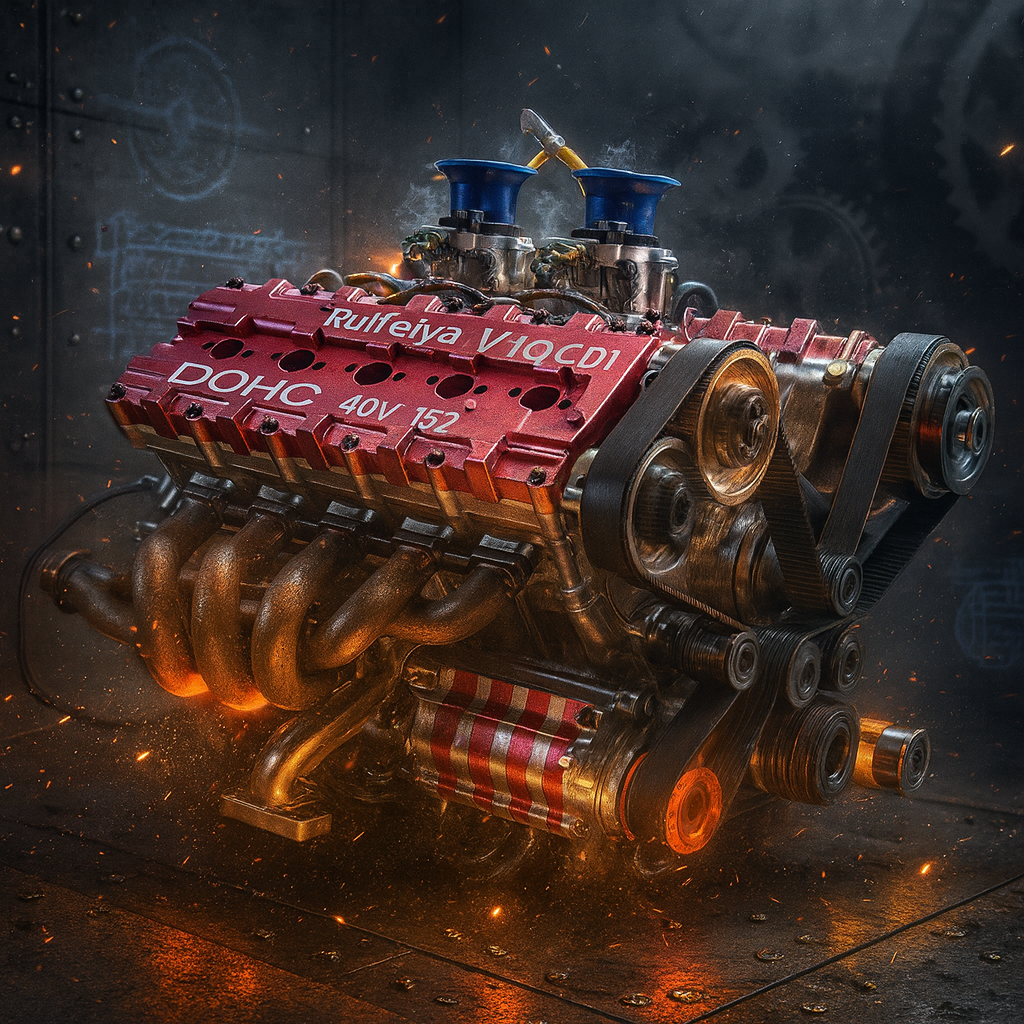
    Currently featured is the RUIFEIYA V10-150, a 1/4-scale 150cc four-stroke gasoline V10 with DOHC 40-valve architecture, water cooling and real internal-combustion operation. It brings the structure, sound and mechanical complexity of a high-performance V10 into a functional miniature engine platform.
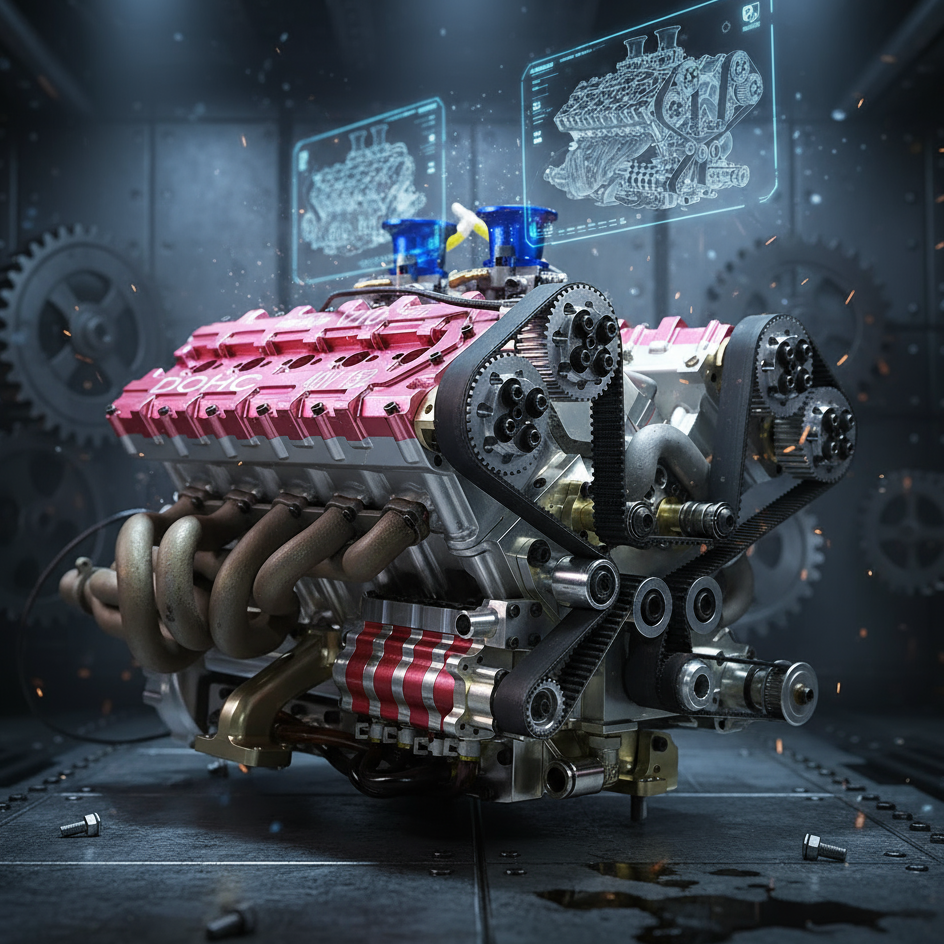
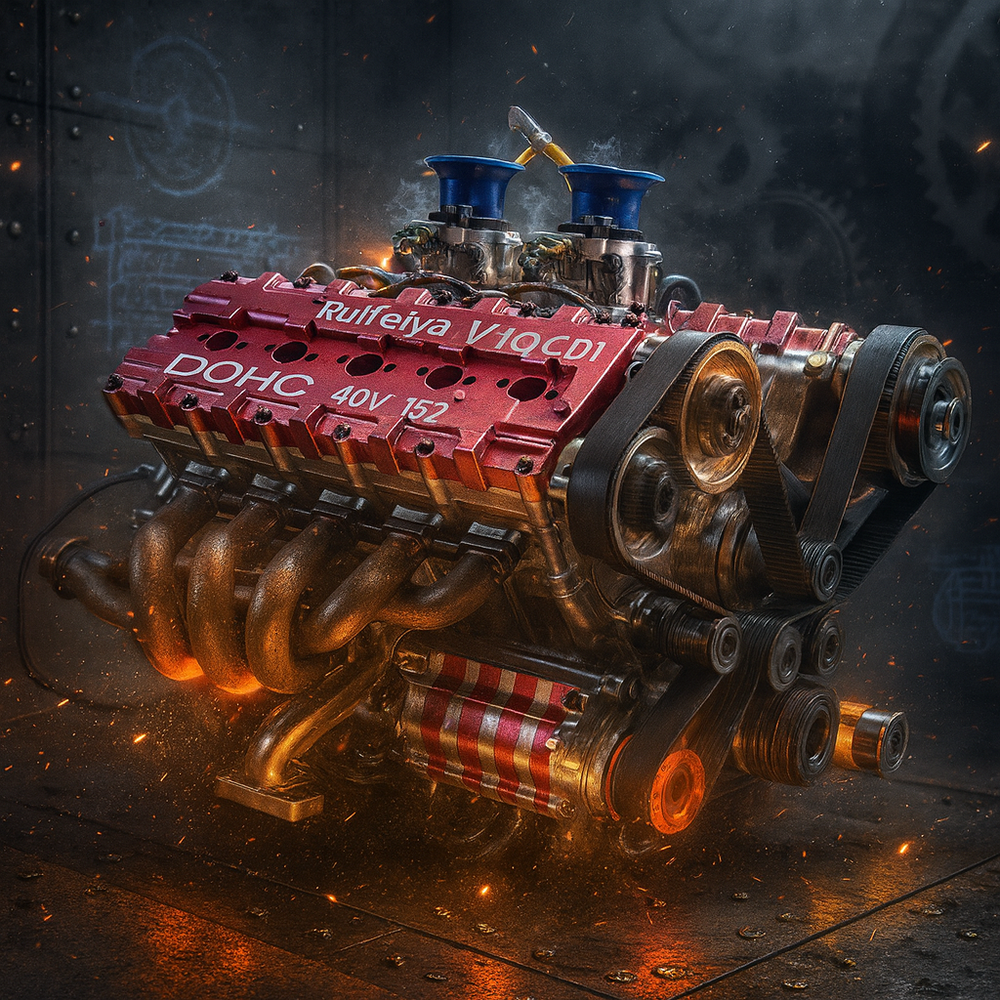
    RUIFEIYA V10-150 1/4 Scale 150cc DOHC V10 Gasoline Engine Model – 16HP Water-Cooled 4-Stroke Engine for RC & Collectors
    RUIFEIYA V10-150 1/4 Scale 150cc DOHC V10 Gasoline Engine Model – 16HP Water-Cooled 4-Stroke Engine for RC & Collectors
    Enginekitor
    $9,499.99
    $11,999.99 SAVE $2,500.00
    TEN CYLINDERS • REAL COMBUSTION • HIGH-END MINIATURE ENGINEERING

    Explore Working V10 Engine Engineering

    A working miniature V10 engine sits at the extreme end of the model-engine spectrum. Ten cylinders, two cylinder banks, complex valve control, cooling, lubrication and fuel systems must work together as one functioning internal-combustion engine.

    ENGINEKITOR currently features the RUIFEIYA V10-150 — a 1/4-scale, 150cc four-stroke gasoline V10 created for serious engine enthusiasts, collectors and large-scale mechanical projects.

    FEATURED WORKING V10

    RUIFEIYA V10-150 — A Real V10 in Miniature

    The V10-150 is not simply a display replica with electrically simulated piston movement. It is an assembled 150cc gasoline internal-combustion engine built around a genuine ten-cylinder V configuration.

    Its architecture combines DOHC cylinder heads, 40 valves, dual carburetors, independent lubrication, external water cooling and electric starting in a compact 1/4-scale platform.

    THE NUMBERS BEHIND THE V10

    RUIFEIYA V10-150 at a Glance

    150cc Displacement
    10 Cylinders
    40 Valves
    16 HP Rated Power
    11,000 Maximum RPM
    TEN-CYLINDER ARCHITECTURE

    What Makes a V10 Engine Different?

    The defining feature is not simply displacement. A V10 places ten cylinders across two banks connected to a common crankshaft, creating an engine architecture with substantially more moving components than a typical single- or twin-cylinder model.

    01 Ten Cylinders

    Ten pistons, ten combustion chambers and a shared crankshaft create the foundation of the V10 architecture.

    02 Two Cylinder Banks

    The cylinders are arranged in opposing banks, producing the distinctive proportions of a V-type engine.

    03 Complex Valvetrain

    Intake and exhaust events must remain synchronized across all ten cylinders throughout the four-stroke cycle.

    04 Integrated Engine Systems

    Fuel, ignition, cooling and lubrication all become part of one complete running system.

    DOHC • 40 VALVES

    Inside the V10-150 Valvetrain

    A COMPLETE OPERATING SYSTEM

    More Than Ten Pistons

    A real working V10 depends on several supporting systems operating together.

    FUEL DELIVERY Dual Carburetors

    The V10-150 uses a dual-carburetor configuration as part of its gasoline fuel-delivery system.

    COOLING External Water Cooling

    An external centrifugal water pump circulates coolant through the engine to manage operating temperature.

    LUBRICATION Independent Oil System

    Dedicated lubrication delivers oil to critical internal components during engine operation.

    IGNITION Ten-Cylinder Ignition

    Each cylinder requires correctly controlled ignition as part of the complete combustion sequence.

    STARTING Electric Motor Start

    The engine uses an electric starting system rather than requiring manual crank starting.

    EXHAUST Real Combustion Output

    Because this is an actual gasoline engine, operation produces real exhaust gases, heat and mechanical sound.

    UNDERSTAND THE DIFFERENCE

    Working V10 Engine vs Motor-Driven V10 Model

    MOTOR-DRIVEN MODEL

    Mechanical Demonstration

    A motor-driven V10 model may reproduce piston, crankshaft and valve movement using an electric motor. This can be excellent for assembly and visual education, but it does not create power through internal combustion.

    ENGINE ARCHITECTURE

    V10 vs V8 Engine Models

    Both layouts use two cylinder banks, but the additional two cylinders change the architecture, component count and overall mechanical layout.

    Architecture V10 Engine V8 Engine
    Cylinder Count 10 cylinders 8 cylinders
    Layout Two banks forming a V10 configuration Two banks forming a V8 configuration
    Mechanical Complexity Very high due to ten-cylinder architecture High, but with two fewer cylinders
    Collector Character Uncommon ten-cylinder engineering Classic and widely recognized V8 architecture
    ENGINEKITOR Range RUIFEIYA V10-150 Multiple miniature and mechanical V8 platforms
    HIGH-END ENGINE COLLECTING

    Who Is a Working Miniature V10 For?

    COLLECTORS Serious Engine Collectors

    The scale, complexity and uncommon V10 architecture make this a centerpiece rather than an ordinary desktop model.

    AUTOMOTIVE Automotive Enthusiasts

    For enthusiasts interested in advanced multi-cylinder automotive engine architecture.

    ENGINEERING Mechanical Enthusiasts

    The visible relationship between cylinders, valvetrain, cooling and lubrication provides substantial mechanical depth.

    PROJECTS Large-Scale RC Builders

    The engine may also interest experienced builders developing custom large-scale mechanical projects, subject to project compatibility.

    BEFORE YOU CHOOSE A V10

    Understand the Complete Ownership Experience

    01

    This Is a Real Engine

    A fuel-powered V10 requires substantially more preparation than an electric mechanical model. Fuel, ignition, lubrication, cooling and safe starting are all part of the experience.

    02

    Prepare the Cooling System

    The V10-150 is water-cooled and uses an external centrifugal pump. Correct coolant circulation must be established before sustained operation.

    03

    Prepare the Starting & Electrical System

    Electric starting and ignition require appropriate electrical power. Follow the exact model specifications for the starter, ignition and battery configuration.

    04

    Use an Appropriate Operating Area

    A working V10 produces heat, exhaust gases, high-speed rotating components and significant mechanical energy. Use secure mounting and suitable ventilation.

    05

    Plan for Maintenance

    Real engines require ongoing inspection, lubrication, fuel-system care and cooling-system maintenance.

    06

    Confirm Project Compatibility

    If the engine will be installed in a custom RC vehicle, boat or mechanical project, confirm dimensions, drivetrain requirements, cooling and installation space before ordering.

    Important: the RUIFEIYA V10-150 is a real high-output miniature gasoline engine.

    It involves gasoline, electrical ignition, hot surfaces, exhaust gases and high-speed rotating components. It should be operated by experienced adults using secure mounting, appropriate ventilation and the instructions supplied for the engine.

    COMMON QUESTIONS

    V10 Engine Model FAQ

    What is a V10 engine?

    A V10 is a ten-cylinder engine with the cylinders arranged across two banks in a V configuration and connected to a common crankshaft.

    Is the RUIFEIYA V10-150 a real working engine?

    Yes. It is a functional gasoline internal-combustion engine, not simply a motor-driven display model.

    What displacement is the RUIFEIYA V10-150?

    The V10-150 has a total displacement of 150cc, distributed across ten cylinders.

    How much power does the V10-150 produce?

    The current manufacturer specification lists maximum power at approximately 16 horsepower.

    What is the maximum RPM of the V10-150?

    The current specification lists an operating range up to approximately 11,000 RPM.

    How many valves does the V10-150 have?

    It uses four valves per cylinder. Across ten cylinders, this results in a total of 40 valves.

    What does DOHC mean on a V10 engine?

    DOHC means Double Overhead Camshaft. It describes the camshaft arrangement used to control intake and exhaust valve operation.

    Is the V10-150 water-cooled?

    Yes. The engine uses a water-cooling system supplied by an external centrifugal water pump.

    How is the V10-150 started?

    The engine uses an electric motor starting system. Correct power supplies for the starter and ignition system are required according to the engine instructions.

    Is this V10 supplied as an assembly kit?

    The current V10-150 is supplied as an assembled engine rather than a conventional build-from-parts engine kit.

    Is a working V10 suitable for beginners?

    This is a complex high-output miniature combustion engine. Familiarity with fuel engines, electrical systems, cooling and mechanical maintenance is highly beneficial.

    Can the V10-150 be used in an RC vehicle?

    The engine can be considered for suitable large-scale custom projects, but compatibility is project-specific. Dimensions, drivetrain, cooling, mounting and control requirements should be confirmed before installation.

    What is the difference between a V10 and V8 engine model?

    The primary architectural difference is cylinder count: a V10 uses ten cylinders, while a V8 uses eight. This changes the engine layout, number of moving components and overall mechanical architecture.

    Can ENGINEKITOR help with V10 setup and technical questions?

    ENGINEKITOR provides technical and after-sales assistance for supported products. For setup or troubleshooting, provide the exact engine model together with clear photos or videos showing the installation or issue.