ENJOMOR GS-V8 78cc Review: Premium Working V8 Engine for Collectors (2026)

The ENJOMOR GS-V8 is not a decorative V8 replica and it is not an electrically driven demonstration model. It is a genuine 78cc, four-stroke gasoline V8 designed for enthusiasts who want to experience real miniature internal combustion.
Its DOHC valvetrain, water cooling, independent oil-pump lubrication, CDI ignition and electric starting system put it in a very different category from the typical desktop engine model.
That also means this is not the right V8 for everyone. The GS-V8 demands more preparation, more mechanical knowledge and a larger investment than a conventional assembly kit—but that is exactly why it can be so appealing to experienced collectors and miniature-engine enthusiasts.
In this review, we look closely at what makes the ENJOMOR GS-V8 78cc different and who should seriously consider owning one.
View ENJOMOR GS-V8ENJOMOR GS-V8 Review: Quick Verdict
The GS-V8 makes the most sense for someone who wants more than an attractive mechanical object. Its real value comes from combining collector-grade presentation with genuine engine operation.
If your main goal is simply assembling hundreds of components and watching a mechanism move, a full-metal mechanical V8 may be the more practical choice. If you want to deal with fuel, ignition, lubrication, cooling, starting and real engine behavior, the GS-V8 becomes much more interesting.

ENJOMOR GS-V8 78cc Specifications
Before discussing the ownership experience, it is worth understanding what the GS-V8 actually is. The current ENGINEKITOR specification places it firmly in the category of real miniature internal-combustion engines.
| Brand / Model | ENJOMOR GS-V8 |
|---|---|
| Engine Type | Gasoline internal-combustion engine |
| Configuration | V-shaped 8-cylinder |
| Displacement | 78cc |
| Cycle | Four-stroke |
| Valve Mechanism | DOHC |
| Bore | 22.9 mm |
| Stroke | 20.0 mm |
| Maximum Speed | 9,000 RPM |
| Maximum Power | 3.8 kW |
| Cooling | Water cooling |
| Lubrication | Independent oil-pump lubrication |
| Ignition | CDI ignition with distributor |
| Starting Method | Electric start |
| Fuel | 95# gasoline |
| Recommended Oil | 20W or above |
| Oil Capacity | 50 ml |
| Starting Power | 24–48V battery required |
| Product Size | 13.6 × 17.9 × 13.8 cm |
| Engine Weight | Approx. 4.5 kg |
What Makes the GS-V8 Different from a Typical Engine Model?
The cylinders are not being moved by an electric demonstration motor. The GS-V8 operates through genuine gasoline combustion.
Dual overhead camshafts create a more sophisticated cylinder-head and timing architecture than simpler miniature engine layouts.
A dedicated oil-pump system circulates lubricant to critical moving components instead of relying on a simplified display mechanism.
The cooling system serves a real operating purpose by managing heat generated during combustion and extended engine operation.
Real ignition and a distributor add another layer of engine-system complexity that mechanical replicas simply do not need.
A brushless electric starting system makes the starting architecture closer to a functional miniature powerplant than a hand-operated demonstration model.

Why 78cc Matters
Displacement is one of the details that immediately separates the GS-V8 from many miniature V8 engines. At 78cc, the engine has substantially more physical and mechanical presence than smaller 20–30cc-class V8 platforms.
That matters for collectors because the engine feels less like a novelty desktop mechanism and more like a compact powerplant. The block, cylinder heads, timing system, intake, exhaust and cooling hardware all have enough physical scale to remain visually interesting even when the engine is not running.
It also changes the ownership expectations. A larger real combustion engine should be treated as machinery rather than as a conventional model kit. Proper setup and operating procedures become considerably more important.
DOHC Architecture: More Than a Visual Detail
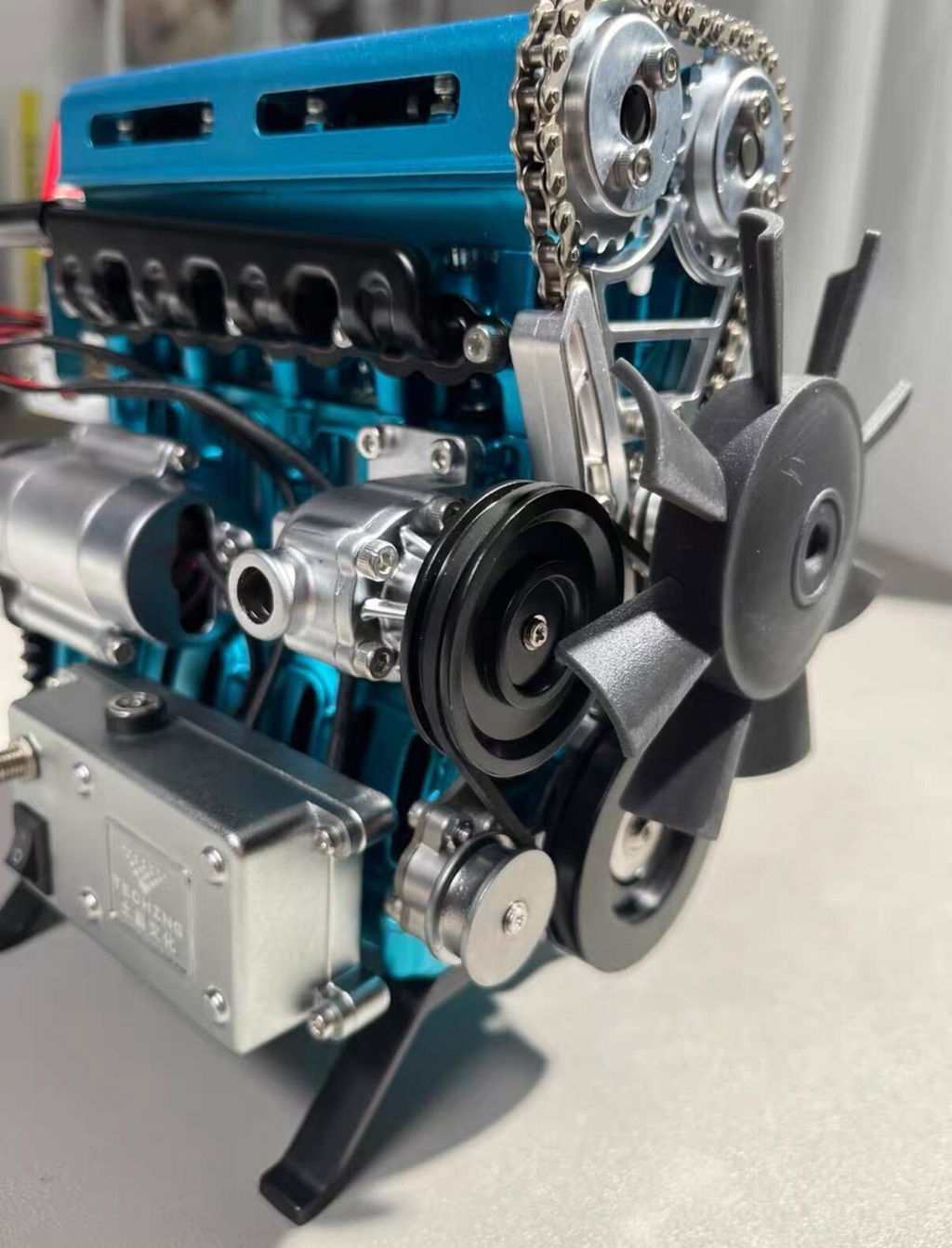
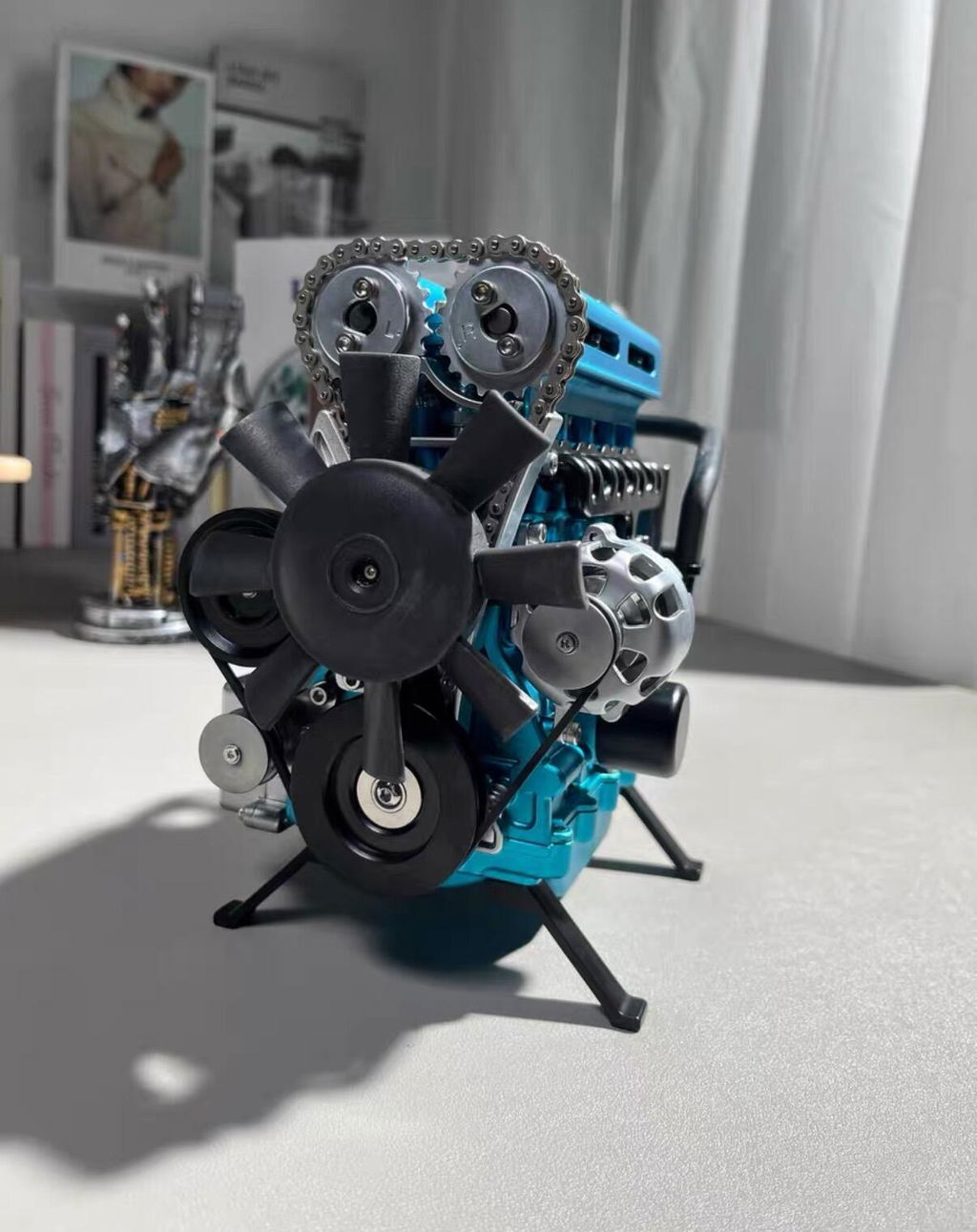
The dual overhead camshaft layout is one of the GS-V8's defining engineering features. DOHC places the camshafts above the cylinder heads and gives the engine a more complex valvetrain and timing structure.
For an enthusiast, that adds visual interest because more of the relationship between crankshaft timing, camshaft timing and valve operation can be appreciated as part of the engine's overall architecture.
It also gives the GS-V8 a distinctly modern high-performance-engine identity, which helps explain why the model works so well as a collector piece even when it is stationary.

Is the ENJOMOR GS-V8 a Real Working Engine?
Yes. This is one of the most important distinctions to understand before buying it. The GS-V8 is a real gasoline-powered miniature internal-combustion engine, not simply a model that simulates piston movement.
It uses real ignition, gasoline combustion, oil lubrication, water cooling and an electric starter. That means the experience extends far beyond display. Owners need to understand how these systems interact and how the engine should be prepared, started, monitored and maintained.
A mechanical V8 model can demonstrate how an engine moves. The GS-V8 demonstrates what it is like to actually operate a miniature engine. Those are two different hobbies, even though both products may be described as V8 engine models.
The Operating Experience: Sound, Motion and Mechanical Presence
One reason enthusiasts gravitate toward real-running miniature engines is that the experience involves more senses than a static display. There is real mechanical vibration, exhaust sound, heat, throttle response and visible movement.
On a V8 platform, that becomes especially compelling because eight cylinders are interacting through one compact engine architecture. The sound and physical presence are a large part of why a real-running V8 can remain interesting long after the initial novelty has disappeared.
The exposed mechanical details are equally important. Even when the engine is turned off, the layout gives you something worth studying: cylinder-bank geometry, timing components, intake and exhaust routing, cooling hardware and overall V8 packaging.

Who Is the ENJOMOR GS-V8 Really For?
Good Fit
The GS-V8 makes the most sense for experienced miniature-engine hobbyists, V8 enthusiasts, engineers, premium mechanical collectors and builders interested in advanced RC or custom mechanical projects.
It is especially attractive when the goal is long-term ownership, real engine operation and collector presence rather than simply completing an assembly project.
Probably Not the Best Fit
This is probably not the right starting point if you mainly want an easy weekend build, a maintenance-free desktop display or your first introduction to model engines.
A mechanical assembly kit is usually easier to own because it does not require gasoline, oil, ignition, cooling, starting equipment or combustion-engine troubleshooting.
Collector and Display Value

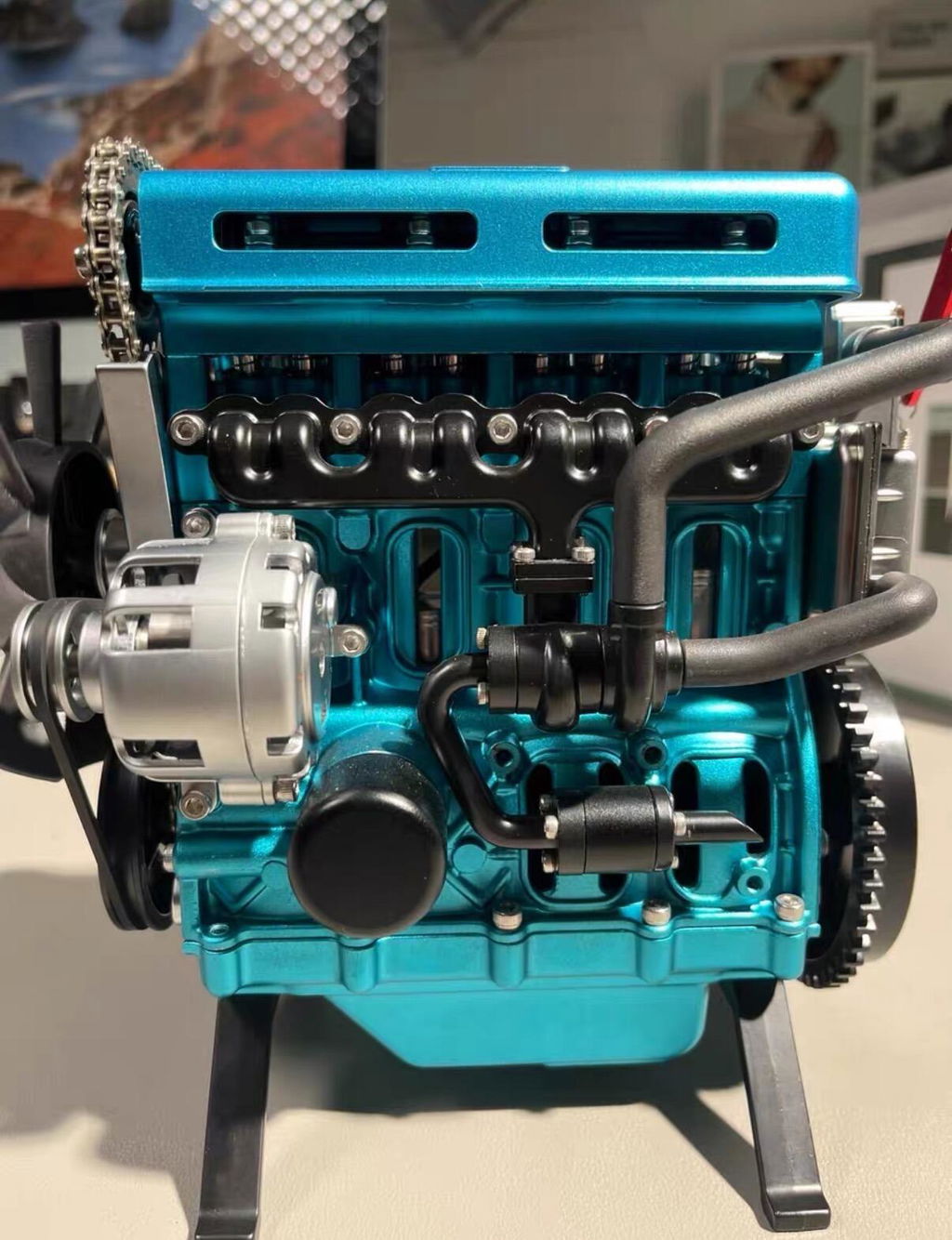
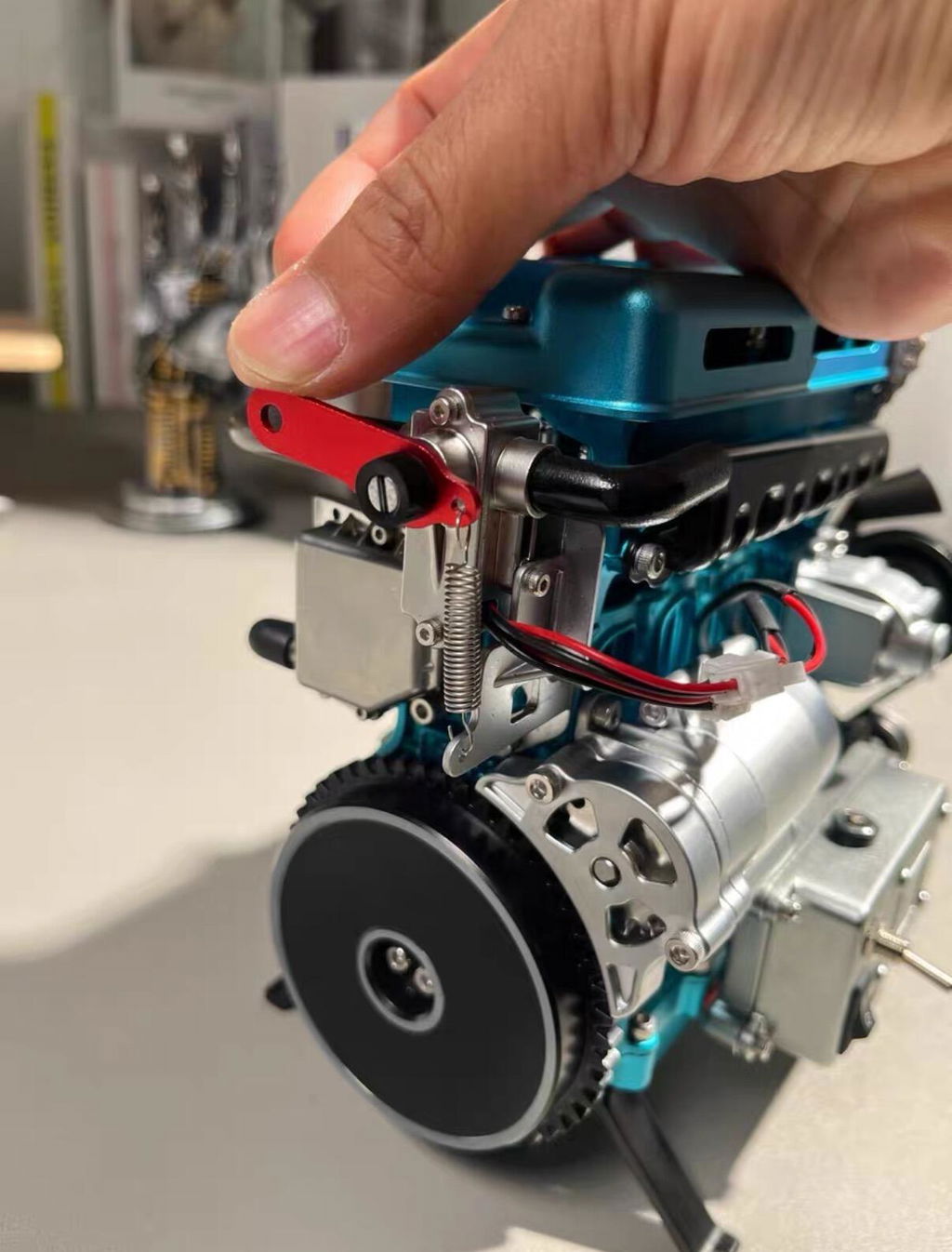
The GS-V8 is unusually strong as a display piece because it does not need to be running to communicate what it is. Its eight-cylinder layout, machined metal surfaces, exposed timing architecture and dense mechanical packaging make the engine visually self-explanatory.
For collectors, this matters. A model that only becomes interesting when activated can lose some of its appeal on a shelf. The GS-V8 works differently: it remains a piece of mechanical engineering even when completely stationary.
That makes it particularly suitable for a workshop, engineering office, automotive collection or dedicated mechanical display.
What Should You Know Before Buying the GS-V8?
The most important thing is to approach this as a real engine rather than a conventional model. The engine itself is only part of the complete operating setup.
- Starting power: the current specification calls for a 24–48V battery.
- Ignition: the CDI ignition system operates at 10–12V.
- Fuel: the current specification lists 95# gasoline.
- Lubrication: the engine uses an independent lubrication system and currently specifies 20W or higher oil.
- Cooling: real engine operation requires the water-cooling system to be set up correctly.
- Consumables and accessories: fuel, oil, batteries and some external operating accessories may need to be prepared separately.
Always follow the latest instructions supplied with your exact engine, especially for fuel, oil, electrical connections, cooling and first-start procedures.
How Does the ENJOMOR GS-V8 Compare with Other V8 Models?
The GS-V8 occupies the premium end of the current ENGINEKITOR V8 range, but it is not automatically the best choice for every enthusiast.
Someone who wants to assemble hundreds of metal parts may actually prefer the TECHING 1:3 mechanical V8. A buyer who wants a smaller real-running engine may prefer a 28cc TOYAN gasoline or nitro V8. The GS-V8 makes the most sense when larger displacement, DOHC architecture and premium collector presence are priorities.
Operating and Safety Considerations
A real miniature V8 produces heat, rotating motion, exhaust gases and mechanical forces. It should therefore be treated with the same basic respect given to other small internal-combustion engines.
Operate it in an appropriate ventilated environment, keep hands and loose objects away from rotating and hot components, secure the engine properly and follow the manufacturer's operating procedure.
If you are unfamiliar with miniature combustion engines, learning the setup and operating process before the first start is a better approach than attempting to start the engine immediately after unpacking it.
ENJOMOR GS-V8 Frequently Asked Questions
Is the ENJOMOR GS-V8 a real working V8 engine?
Yes. The GS-V8 is a real 78cc four-stroke gasoline internal-combustion engine with eight cylinders, DOHC valve operation, ignition, lubrication, water cooling and electric starting.
What fuel does the ENJOMOR GS-V8 use?
The current product specification lists 95# gasoline. Always check the latest manual supplied with your specific engine before preparing fuel.
How much power does the GS-V8 produce?
The current specification lists maximum power at 3.8 kW and maximum engine speed at 9,000 RPM.
Does the ENJOMOR GS-V8 use water cooling?
Yes. It uses a real water-cooling system intended to help control operating temperature during combustion-engine use.
How is the GS-V8 lubricated?
The engine uses an independent oil-pump lubrication system. The current specification lists an oil capacity of approximately 50 ml and recommends 20W or higher oil. Follow the supplied manual for exact lubrication procedures.
Does the GS-V8 have electric start?
Yes. The engine uses an electric starting system. The current specification lists a 24–48V battery requirement for starting power.
Is the ENJOMOR GS-V8 suitable for beginners?
It is better suited to experienced hobbyists. A beginner can learn to operate a real miniature engine, but the GS-V8 requires considerably more understanding of fuel, lubrication, ignition, cooling and safe starting procedures than a mechanical display model.
Is the GS-V8 supplied as a simple DIY assembly kit?
The GS-V8 should primarily be viewed as a real miniature combustion engine rather than the same type of part-by-part mechanical building kit as a TECHING V8. Check the current product configuration before purchase to confirm exactly what is included.
Can the GS-V8 be used in RC projects?
It may be suitable for advanced custom RC or mechanical projects, but installation can require custom mounting, drivetrain, cooling, fuel and electrical systems. It should not be treated as a direct drop-in engine without engineering the surrounding system.
Is the ENJOMOR GS-V8 a good collector piece?
Yes. Its 78cc displacement, DOHC architecture, machined metal construction and real-running design give it considerably more mechanical and visual presence than a typical static engine model.
What alternatives should I consider?
For a build-focused experience, consider a full-metal mechanical V8 such as the TECHING 1:3 model. For smaller real combustion V8 options, TOYAN offers gasoline and nitro 28cc platforms. You can compare them in our complete V8 buying guide.
Final Verdict: Is the ENJOMOR GS-V8 Worth It?
For the right enthusiast, the GS-V8 offers something that ordinary engine models cannot: the visual presence of a premium miniature V8 combined with the responsibility and satisfaction of operating a real internal-combustion engine.
Its 78cc displacement, DOHC architecture, real water cooling, independent lubrication, CDI ignition and electric starting make it a serious enthusiast platform, not simply a decorative interpretation of a V8.
If you mainly want an easy build, there are more practical choices. If you want a substantial real-running V8 for mechanical study, operation and long-term collecting, the ENJOMOR GS-V8 is one of the most distinctive engines currently available in the ENGINEKITOR range.
View ENJOMOR GS-V8Compare All V8 Engine Models


Dejar un comentario