Twin-Cylinder vs Single-Cylinder Mini Engines: Which Is Better for Builders?

A miniature engine can look impressive with one cylinder. Add a second cylinder, however, and the mechanical story becomes much more interesting.
A twin-cylinder mini engine adds another piston, connecting rod, combustion chamber and sequence of mechanical events to a crankshaft system that must operate as one coordinated machine.
But does that automatically make a twin-cylinder miniature engine better than a single-cylinder engine?
Not necessarily.
The better choice depends on what you want from the experience: simplicity, mechanical visibility, assembly challenge, authentic engine behavior, sound, tuning, or the satisfaction of operating a more complex multi-cylinder system.
A single-cylinder miniature engine usually offers fewer components, simpler diagnosis and a more direct view of one complete combustion cycle. A twin-cylinder miniature engine adds another cylinder and a greater level of mechanical coordination, making it especially attractive to builders who want a more advanced multi-cylinder engine experience.
Neither configuration is universally better. For a builder interested in realistic automotive-style engine architecture, synchronized mechanical systems and real multi-cylinder combustion, a twin-cylinder platform such as the ENGINEKITOR F2 offers significantly more to assemble, observe and understand.

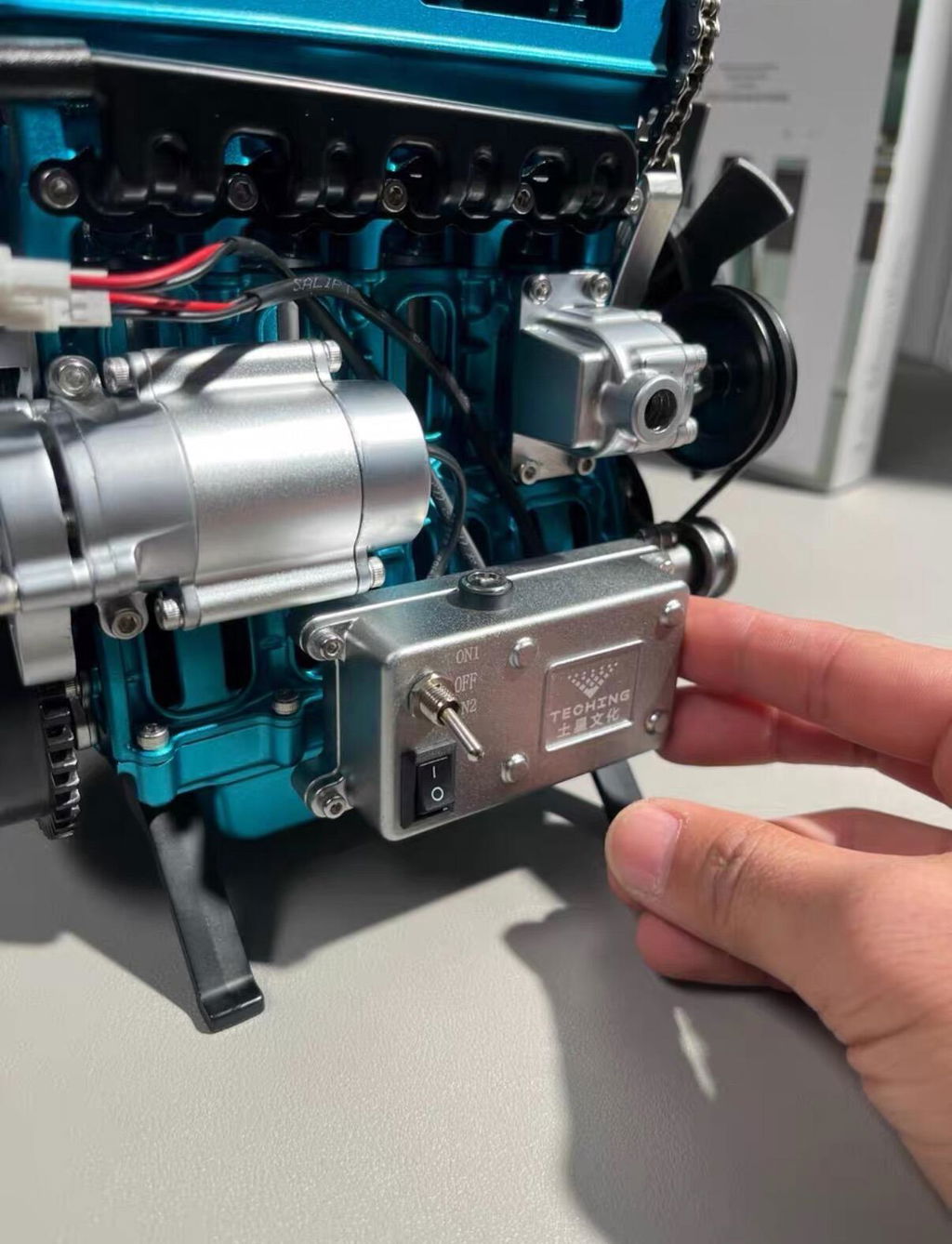
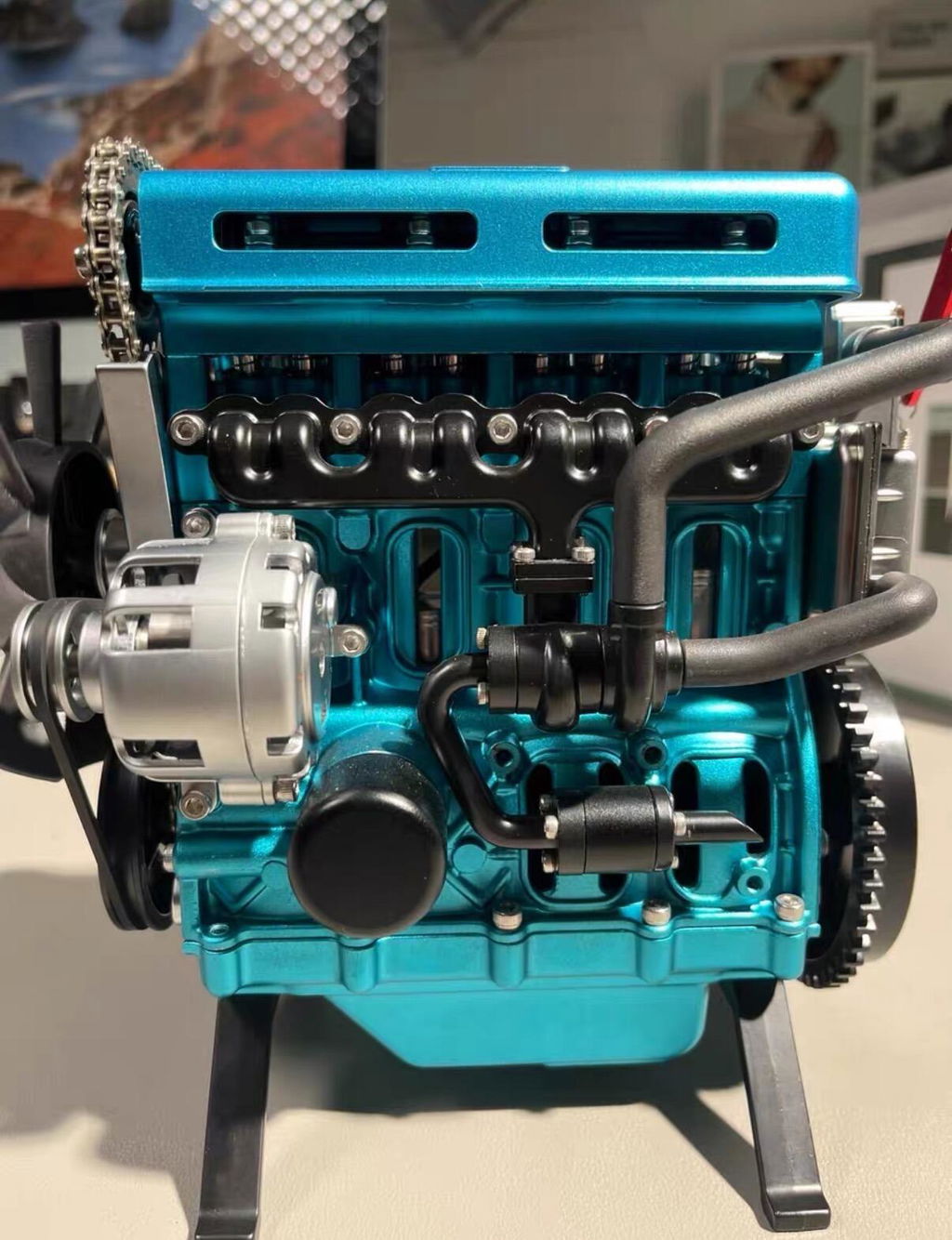
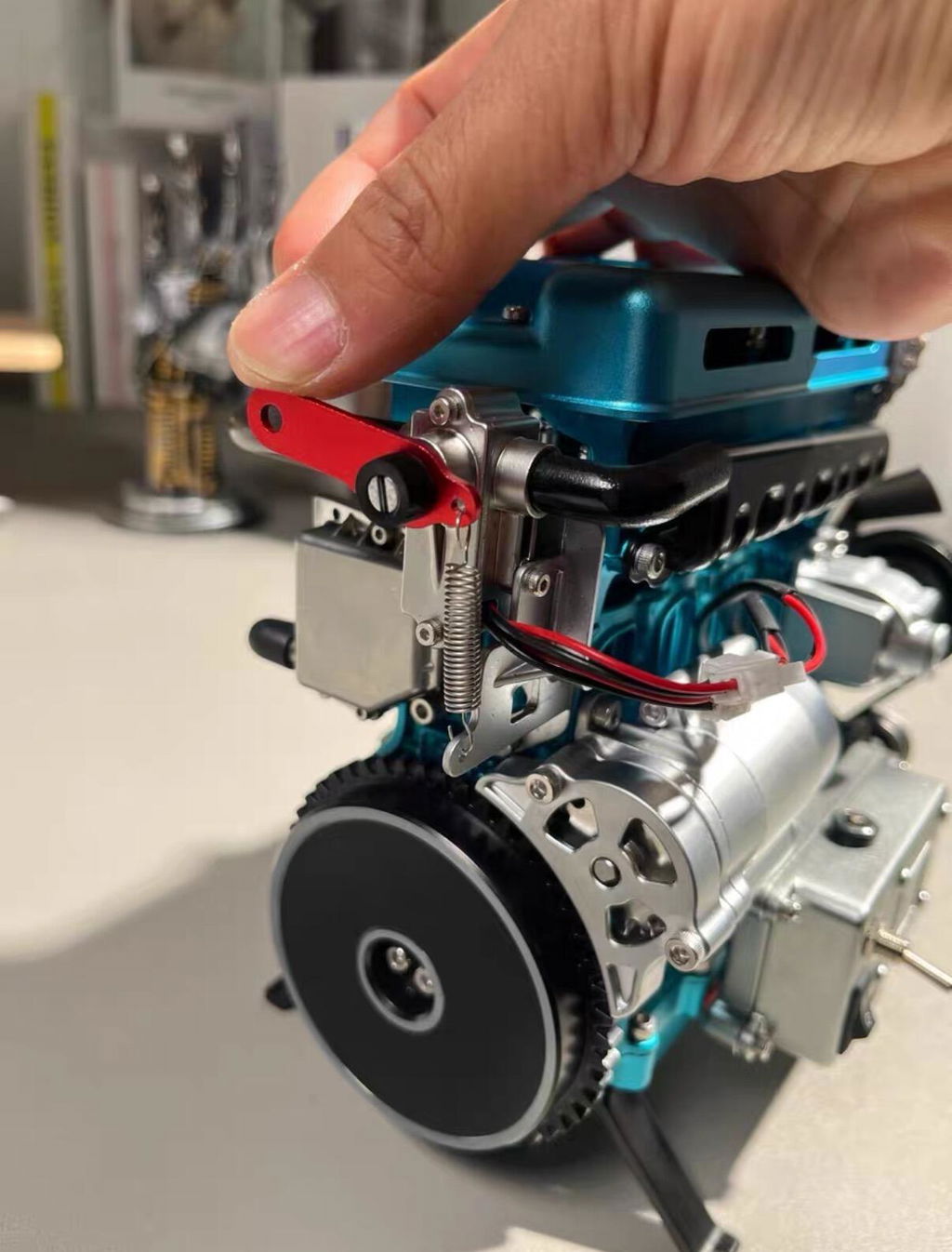
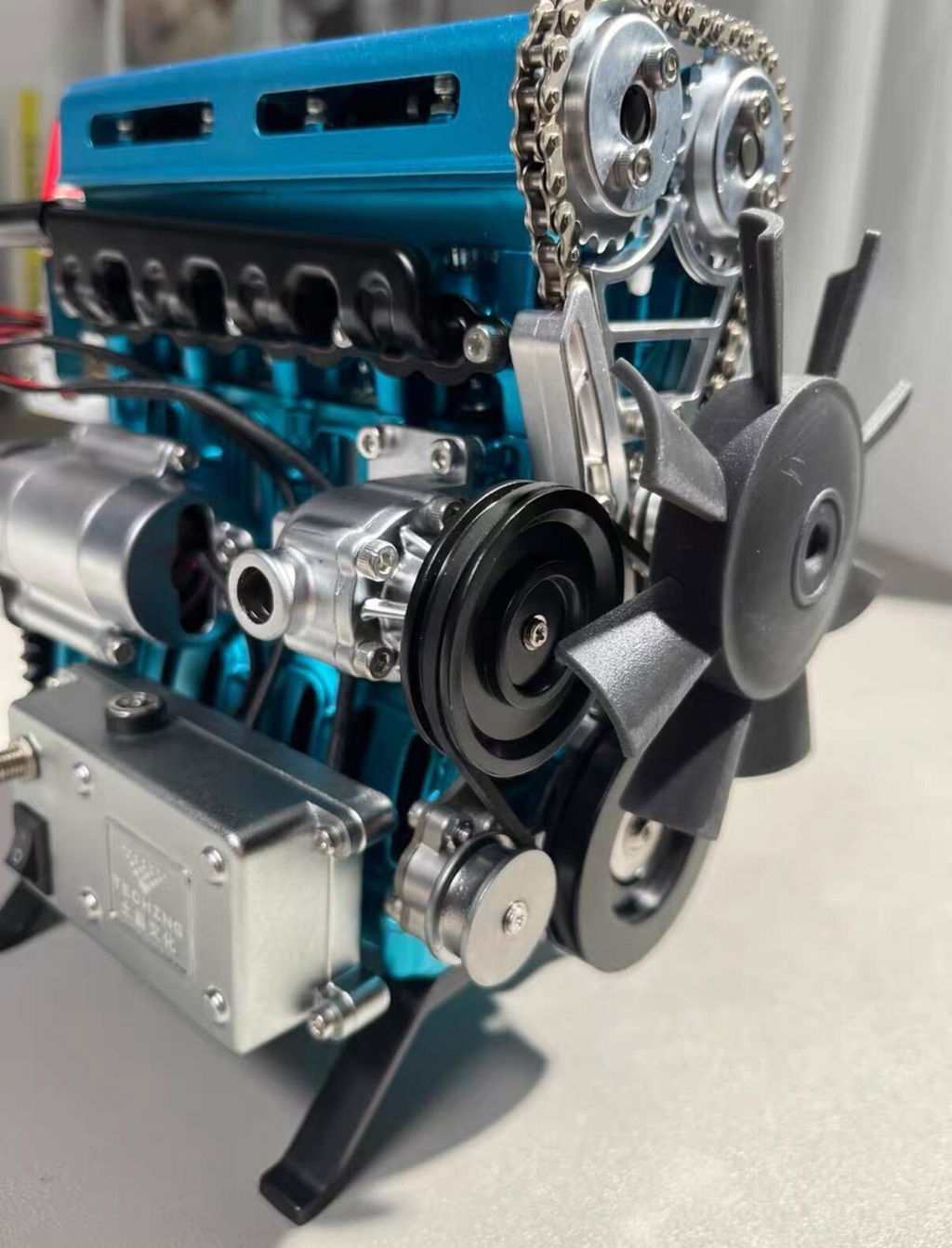
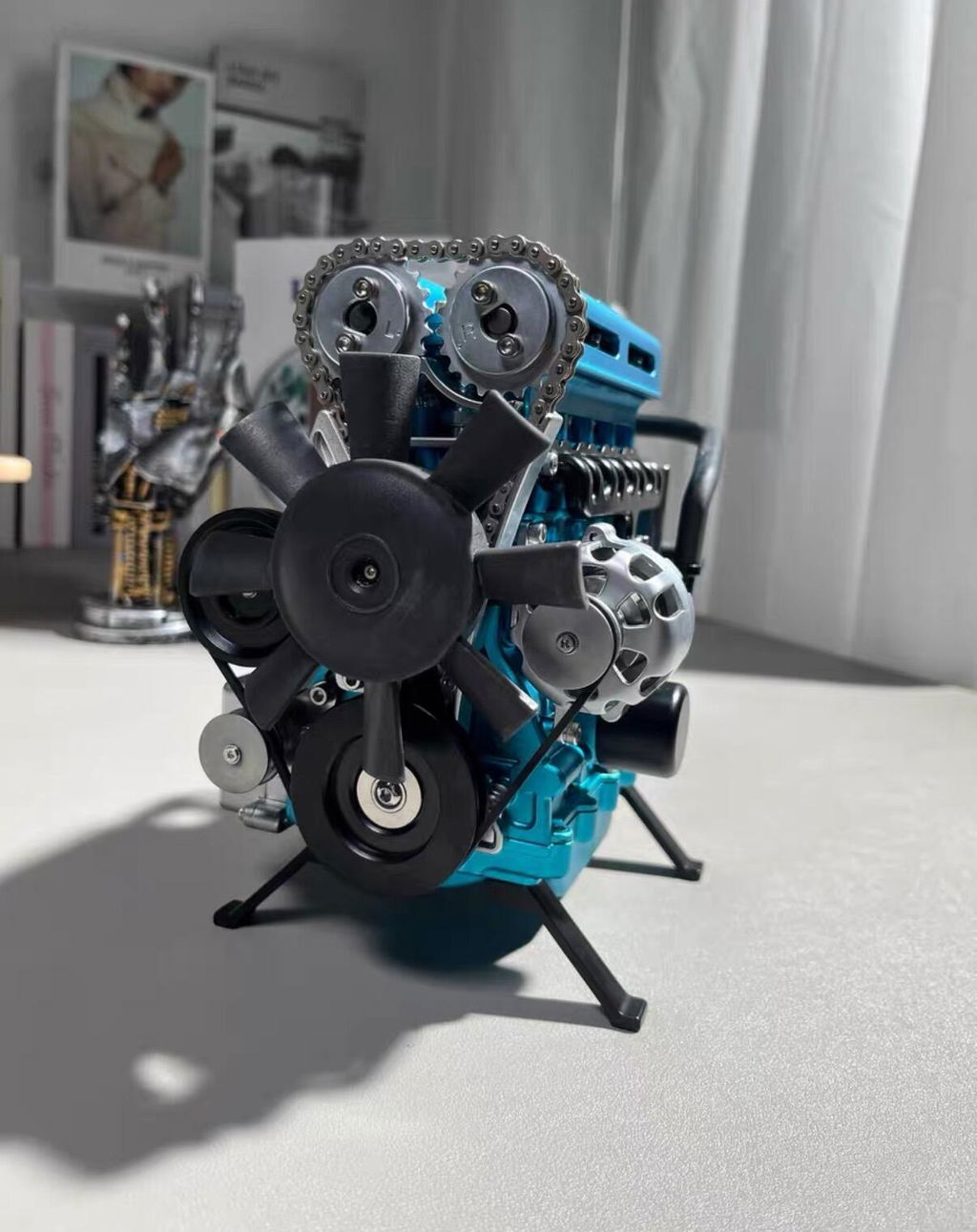
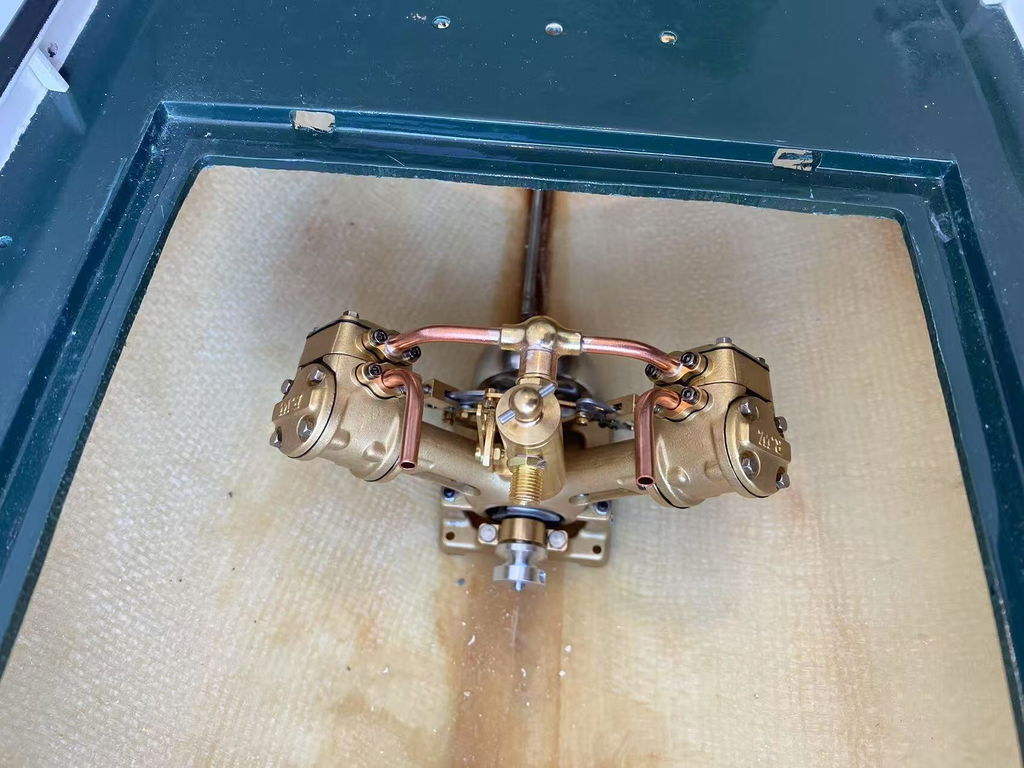
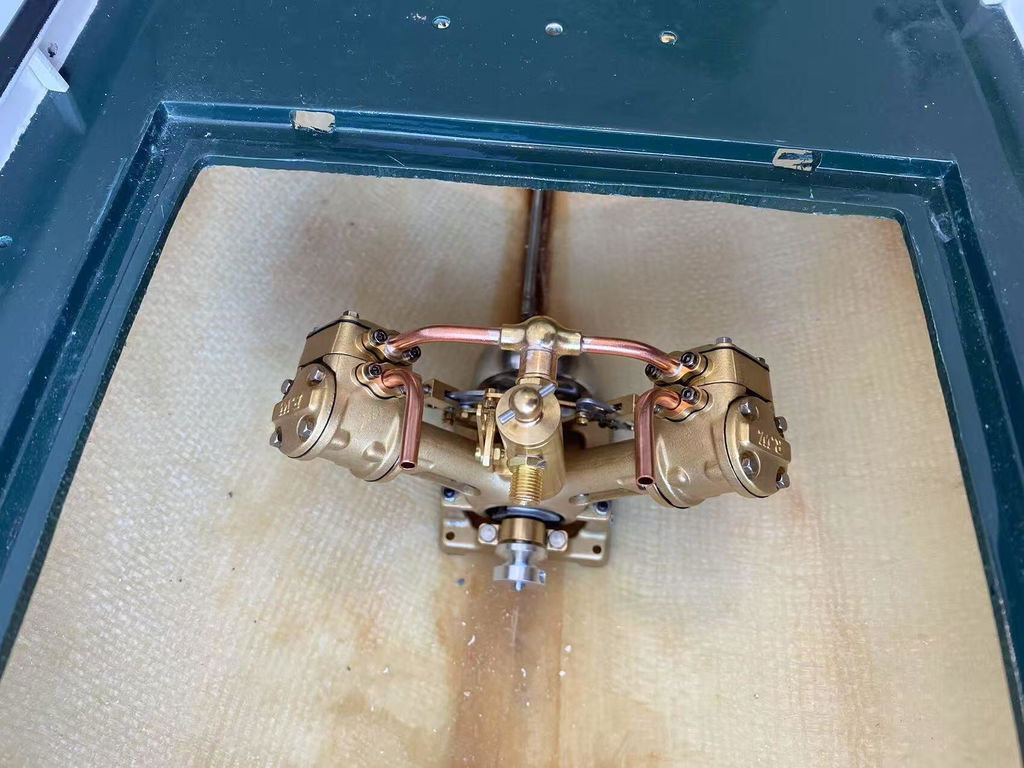
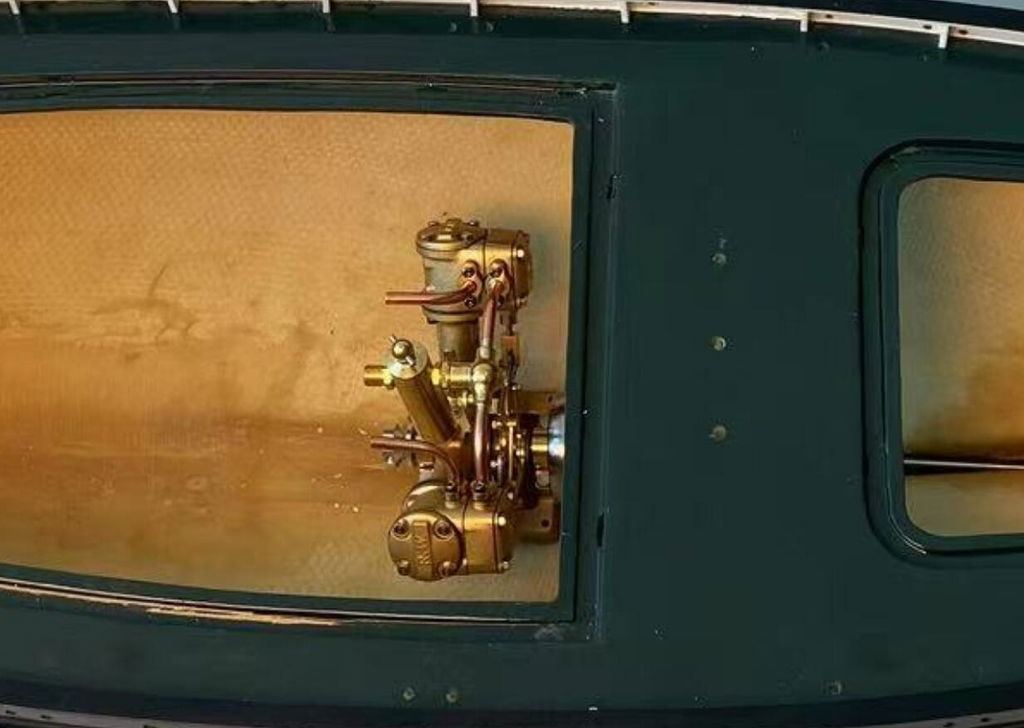
ENGINEKITOR F2 — a real working 7.5cc inline twin-cylinder four-stroke gasoline engine.
What Is a Single-Cylinder Miniature Engine?
A single-cylinder piston engine uses one cylinder, one piston and one combustion chamber to create the engine's power strokes.
In a four-stroke design, that cylinder moves through:
The piston connects to the crankshaft through a connecting rod. Valve events, fuel delivery and ignition are all coordinated around one cylinder.
That relative simplicity can make a single-cylinder engine extremely useful for learning. There are fewer simultaneous events to diagnose, and the relationship between piston position, compression, ignition and crankshaft movement can be easier to isolate.
What Is a Twin-Cylinder Mini Engine?
A twin-cylinder engine uses two cylinders connected to a common crankshaft system.
Each cylinder still has to perform the same fundamental four-stroke process, but the engine now has two sets of combustion events that must work within one coordinated mechanical architecture.
This adds more than simply “one extra piston.”
Depending on the specific engine design, a twin-cylinder system may involve:
- Two pistons
- Two combustion chambers
- Additional connecting-rod geometry
- Multiple intake and exhaust events
- More valve events in a four-stroke design
- Multi-cylinder ignition coordination
- More complex fuel distribution
- More thermal load to manage during operation
The exact crankshaft arrangement, firing sequence and ignition strategy depend on the individual engine design, so cylinder count alone should never be used to assume a specific firing interval or vibration characteristic.
Single-Cylinder vs Twin-Cylinder Mini Engines: Quick Comparison
| Factor | Single-Cylinder Mini Engine | Twin-Cylinder Mini Engine |
|---|---|---|
| Cylinder Count | One cylinder and combustion chamber | Two cylinders sharing a common crankshaft system |
| Mechanical Complexity | Generally simpler | More components and coordination |
| Assembly Experience | More straightforward | More advanced multi-cylinder assembly experience |
| Timing | One cylinder's valve and ignition events to understand | Multiple cylinder events must remain coordinated |
| Troubleshooting | Usually easier to isolate one system | Requires determining whether both cylinders contribute correctly |
| Sound | Distinct single-cylinder combustion character | More complex multi-cylinder combustion character |
| Mechanical Learning | Excellent for understanding one complete engine cycle | Excellent for understanding synchronization between multiple cylinders |
| Best For | Builders prioritizing simplicity and direct observation | Builders seeking a more complex automotive-style engine project |
1. Two Cylinders Add Mechanical Coordination
The most important difference is not simply that a twin has twice as many cylinders.
It is that multiple reciprocating and combustion systems now have to operate through one crankshaft.
In a four-stroke twin-cylinder miniature engine, the builder is no longer thinking only about:
Instead, the system becomes:
That makes a twin-cylinder engine particularly interesting for builders who want to understand how individual cylinders become part of a larger engine system.

Building the F2 turns twin-cylinder theory into a hands-on mechanical assembly project.
2. A Twin-Cylinder Engine Gives You More Timing Events to Understand
Four-stroke engines depend heavily on timing.
Intake and exhaust valves must open and close in relationship to crankshaft and piston position. Ignition also has to occur at the appropriate point in the cycle.
With one cylinder, this relationship is already important.
With two cylinders, the engine adds another set of piston, valve and combustion events.
That makes the twin-cylinder layout particularly useful for learning a concept that becomes increasingly important as engines gain more cylinders:
An engine is not simply a collection of moving parts. It is a collection of moving parts that must remain synchronized.
For a deeper explanation of crankshaft, camshaft, valve timing and combustion, see How Does a Miniature Gasoline Engine Work?
3. Twin-Cylinder Sound Is More Than Just “Louder”
Sound is one of the reasons enthusiasts are attracted to working miniature combustion engines.
But the difference between single-cylinder and twin-cylinder sound should not be reduced to volume.
Combustion sound depends on:
- Engine speed
- Firing arrangement
- Exhaust design
- Displacement
- Fuel mixture
- Ignition timing
- Mechanical load
Adding another cylinder creates a different sequence of mechanical and combustion events, giving a twin-cylinder engine a more complex operating character.
That does not mean every twin-cylinder engine is automatically smoother, quieter or louder than every single-cylinder design. Those characteristics depend on the actual crankshaft, firing order, balance and exhaust system.
Hear a Real Twin-Cylinder Mini Engine Run
Watch the ENGINEKITOR F2 operating as a real miniature gasoline engine. The movement comes from actual four-stroke internal combustion rather than a hidden electric motor continuously driving the crankshaft.
Build it. Start it. Watch it run. The F2 combines two cylinders, real gasoline combustion, CDI ignition and circulating water cooling in one compact engine platform.
Explore the ENGINEKITOR F2 →
4. Troubleshooting Becomes More Interesting With Two Cylinders
A single-cylinder engine gives the builder one combustion chamber to diagnose.
If the engine does not fire, the basic troubleshooting questions are:
- Is fuel reaching the cylinder?
- Is there compression?
- Is ignition present?
- Is the timing correct?
In a twin-cylinder engine, those same fundamentals still apply, but there is an additional question:
Are both cylinders contributing correctly?
An engine can sometimes show signs of combustion while one side is behaving differently from the other.
Symptoms worth observing include:
- Uneven exhaust or combustion sound
- Unstable RPM
- Unexpected vibration
- Different spark-plug conditions
- Poor throttle response
- Difficulty sustaining operation
This is part of what makes a real twin-cylinder working engine such a useful mechanical learning platform.
5. Cooling Matters More Once You Add Real Combustion
Cylinder count is only part of the story.
A fuel-burning engine also produces real heat.
The ENGINEKITOR F2 therefore uses circulating water cooling with a mechanical water pump.
That introduces another real engine system into the build:
This gives builders an opportunity to understand that an engine cannot be evaluated only by how its crankshaft moves.
Fuel, ignition, timing, lubrication and temperature management are all parts of operating a real combustion engine.

A complete F2 setup brings fuel delivery, starting, ignition and water cooling together.
The ENGINEKITOR F2 as a Real Twin-Cylinder Example
The ENGINEKITOR F2 is a compact working engine designed around a 7.5cc inline twin-cylinder four-stroke architecture.
Each cylinder contributes approximately 3.75cc to the total 7.5cc displacement.
ENGINEKITOR F2 — Key Architecture
This combination makes the F2 more than a static multi-cylinder model. Builders work with a system that has to be assembled, started, tuned, cooled and operated.
For complete dimensions, kit configurations and technical specifications, see the ENGINEKITOR F2 Full Guide .
Which Engine Is More Satisfying to Build?
This depends heavily on what the builder considers satisfying.
Simplicity Has Real Value
Fewer major combustion components can make a single-cylinder engine easier to understand, assemble and troubleshoot. For someone learning the fundamental four-stroke sequence, simplicity can be an advantage rather than a limitation.
Complexity Becomes the Experience
A twin-cylinder build adds another level of synchronization and mechanical interaction. For builders who enjoy timing, multi-cylinder architecture and a more automotive-style project, that extra complexity is often the attraction.
Choose a Single-Cylinder Mini Engine If You:
- Want the simplest possible piston-engine architecture
- Prefer fewer components to assemble and diagnose
- Want to isolate one complete combustion cycle
- Are primarily interested in basic valve and piston mechanics
- Prefer a more straightforward first working-engine project
Choose a Twin-Cylinder Mini Engine If You:
- Want a more advanced multi-cylinder build
- Enjoy mechanical synchronization and timing systems
- Want a more complex combustion-engine sound and operating character
- Are interested in automotive-style engine architecture
- Want to understand how multiple cylinders interact through one crankshaft
- Prefer a project that continues to be interesting after assembly

The Advanced Starter Kit option provides a more complete platform for starting and operating the F2.
Is a Twin-Cylinder Engine Actually Better?
“Better” is the wrong question unless we define the goal.
A twin-cylinder engine is not automatically better simply because it has more parts.
If your goal is the clearest and simplest demonstration of a piston engine, a single-cylinder system may actually be the better choice.
If your goal is to experience:
- Multi-cylinder engine architecture
- Greater mechanical coordination
- More involved assembly
- Multi-cylinder troubleshooting
- A more advanced working-engine project
then a twin-cylinder platform becomes much more compelling.
The key is choosing the architecture that matches what you actually want to learn, build and operate.
Twin-Cylinder Mini Engine FAQ
Is a twin-cylinder mini engine harder to build than a single-cylinder engine?
Generally, a twin-cylinder design introduces more components and more mechanical relationships to manage. The exact difficulty still depends on the individual kit, instructions and engine architecture.
Is a twin-cylinder engine smoother than a single-cylinder engine?
Not automatically. Cylinder count can influence the distribution of combustion events, but actual vibration and smoothness depend on crankshaft geometry, balancing, firing arrangement, engine speed and overall design.
Does a twin-cylinder miniature engine sound better?
That is subjective. A twin-cylinder engine can have a more complex combustion character because more than one cylinder contributes to the engine cycle, while a single-cylinder engine has its own distinctive rhythmic sound.
Is a twin-cylinder mini engine better for learning?
It is better for learning multi-cylinder synchronization and system interaction. A single-cylinder engine can be better for learning the basic combustion cycle with fewer variables.
Is the ENGINEKITOR F2 a real combustion engine?
Yes. The F2 is a real working 7.5cc twin-cylinder four-stroke gasoline engine. Its operating movement is generated through actual internal combustion rather than a hidden motor continuously driving the engine.
Does the F2 require assembly?
Yes. The F2 is offered as an engine-building project, with an optional Advanced Starter Kit available for a more complete starting and running setup.
Ready for a Real Twin-Cylinder Build?
Build a 7.5cc inline twin-cylinder four-stroke gasoline engine with real combustion, SOHC valve timing, CDI ignition and circulating water cooling.
Explore the ENGINEKITOR F2 →One Cylinder Teaches the Cycle. Two Cylinders Teach the System.
A single-cylinder miniature engine can be one of the clearest ways to understand how a piston engine works.
One cylinder brings fuel, compression, ignition and mechanical motion together in a compact system.
Add a second cylinder and the lesson changes.
Now the builder has to think about how multiple pistons, valve events, combustion events and ignition systems operate through one coordinated engine.
That is what makes a twin-cylinder miniature engine especially interesting.
It does not simply give you more parts.
It gives you more relationships to understand.
And for builders who enjoy the point where mechanical assembly becomes real internal-combustion engineering, that added complexity can be exactly what makes the project worth building.


Dejar un comentario